
Warehouse experience on a resume: Warehouse experience belongs on a resume when you explain which part of the flow you actually handled: receiving stock, checking inventory, picking orders, packing goods, moving materials, or documenting exceptions. Choose accurate verbs and named records rather than inventing productivity rates. Do not present equipment observation as a forklift authorization or claim inventory approval if your role was to report discrepancies. A targeted warehouse bullet tells the reader the task, check, and handoff.
Separate stock control from physical material movement
A warehouse title can include very different duties. O*NET lists stockers and order fillers handling counts, receiving, storing, replenishment and order records. Its separate description for manual material movers includes reading work orders and moving freight or stock. Someone who mainly picked orders should not automatically claim to have designed inventory systems, loaded trucks with powered equipment or supervised shipping. Identify the specific job flow before choosing bullets.
Write a quick duties inventory: receiving, putaway, picking, packing, damage checks, dispatch handoffs and record updates. Mark only activities you actually performed. A stock checker who recorded mismatched quantities may have useful accuracy evidence. A manual material handler may have useful workflow and handoff evidence without having operated a forklift. You do not need every warehouse task to demonstrate credible experience.
Use order and inventory documents as proof
Instead of “Worked with merchandise,” a fictional but specific bullet could say, “Compared received cartons against the delivery list and flagged quantity differences for supervisor review.” This is appropriate only if you performed the comparison. A worker who selected items from a picking list might say, “Checked item labels and quantities against pick instructions before handing orders to packing.” Name the actual checks, not hypothetical technologies.
Avoid claiming flawless accuracy, rapid turnaround or zero damage unless real records can support those figures. If your employer used a warehouse management system, use its name only when you personally entered or reviewed data in it. Scanning a barcode under guidance is not the same as administering the WMS. Likewise, collecting information and escalating a discrepancy does not make you the person who approved a stock adjustment.

Describe equipment and safety duties without overclaiming
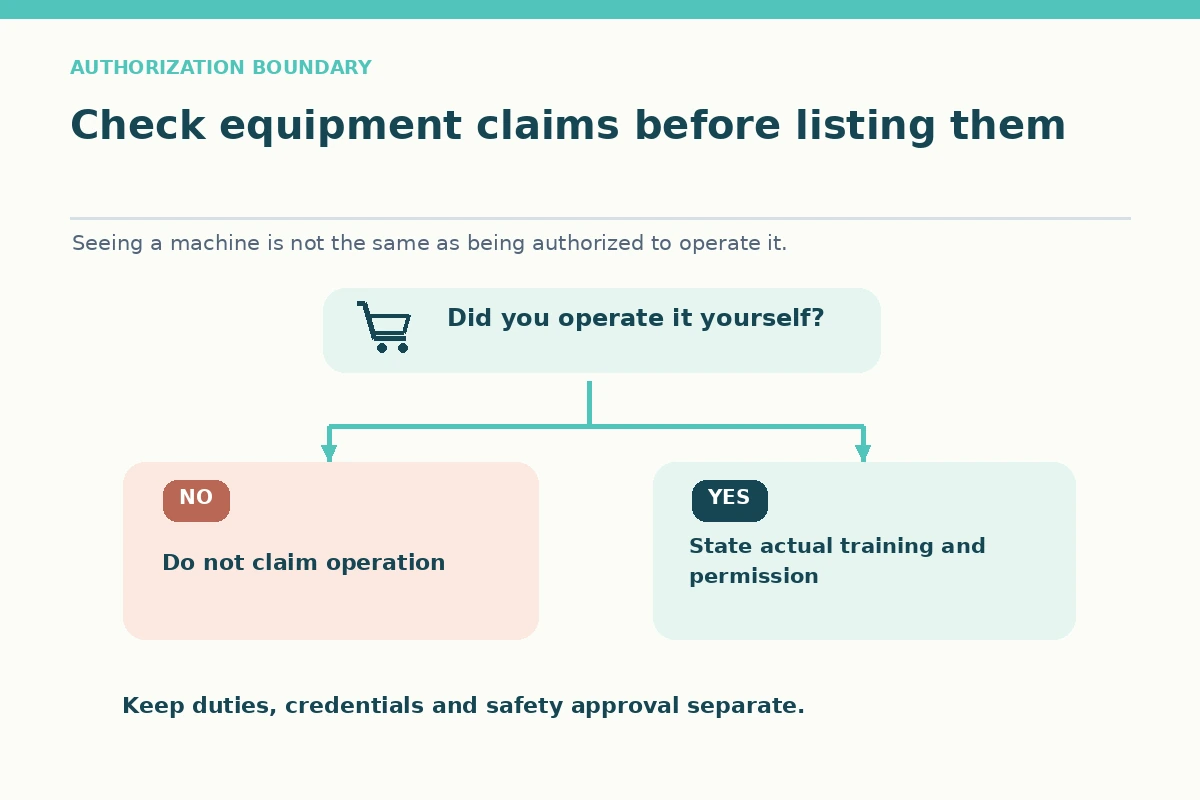
Warehouses may use carts, pallet jacks, conveyors or powered industrial trucks, but tasks and required training are specific. A resume should distinguish loading by hand from driving powered equipment. Do not describe yourself as licensed, certified or qualified on a machine without the true credential and permitted duties. If the employer trained you in approved lifting, staging or reporting procedures, describe that actual training and the tasks you were allowed to perform.
Useful evidence includes following marked locations, keeping aisles clear as assigned, reporting damaged goods and following a supervisor’s handoff process. Do not give operational instructions for machinery on a resume or claim responsibility for compliance that belonged to a trained safety officer. When a job posting names equipment, compare it with your direct experience and qualification status rather than copying the equipment list into your skills section.
Connect warehouse actions to an advertised role
An inventory clerk posting may emphasize counting and updating records; a shipping associate posting may emphasize order identity, labels and outgoing documentation. Select the duties you performed that map to those tasks. A warehouse position involving customer returns may need a different bullet, such as recording damage information for an authorized reviewer. The best resume entry is not a catalog of every station you passed during onboarding.
If you worked across shifts, note a handoff only if you actually prepared one. If you were temporarily reassigned from packing to stock checks, choose a title that remains the official role, then explain the assignment under it. Do not use a senior title such as “warehouse lead” merely because you occasionally showed a new teammate where supplies were kept. Supervising people, approving changes and helping colleagues are distinct forms of work.

Put dates, employers, and work scope in a readable line
Use your employer’s actual name and location, title and dates. Where you were assigned to a site through a staffing agency, follow the employment relationship and identify the client assignment accurately if allowed; do not silently replace the agency with a company that never employed you. A short temporary assignment can be included without exaggerating its length. Consistency between the resume and application form matters more than squeezing every role into a single label.
For a role you still hold, use a current date convention such as “Present,” only if that is true. If the work was seasonal or shift-based, include enough context to explain overlapping positions when it affects the reader’s interpretation. Keep production numbers and warehouse locations confidential unless they are approved for public use. You can show a careful workflow without publishing proprietary inventory data.
Review one complete hypothetical entry
Consider “Warehouse Order Picker | [Employer] | [City, State] | [Dates]. Selected items from assigned pick lists, checked labels against order details, and reported mismatches before packing.” Every bracket is a fact for the individual to fill in. A second bullet might describe packing documentation, if the person actually performed it. The point is to show where errors could be found and who reviewed them, not to pretend that the worker controlled the entire supply chain.
Before sending, compare the posting with a simple table of real actions: what I touched, which document or tool I used, whether I had authorization, and what I recorded or escalated. Remove invented equipment qualifications and unsupported rates. A well-bounded entry can establish dependable work experience without any claim that a resume screening system will accept it automatically.
How We Research Resume Work Experience
JobAsk reviewed these public career and occupation references on November 4, 2026: CareerOneStop: Work Experience (CareerOneStop work history guidance on verifiable achievements and job relevance). O*NET: Stockers and Order Fillers (O*NET tasks for stockers and order fillers, including stock counts, receiving and order records). O*NET: Material Movers (O*NET tasks for manual material movers including reading work orders and moving goods). These explain typical resume practices and job duties; they do not establish any applicant’s real employment history, certifications, or hiring outcome.
Every example and diagram is illustrative. Replace sample actions, employers, months and duties with facts you can verify from your actual work, and recheck each job posting before tailoring an application. For editorial and commercial context, read our affiliate disclosure. This article does not claim a paid referral relationship or guaranteed resume screening result.
More Resume and Cover Letter Guides
No. Observation is not a license or authorization. List training and credentials only when you actually hold them and they remain accurately described.
Describe the real matching process, such as checking labels against pick lists and reporting discrepancies. Do not invent an error rate.
Tasks can overlap, but O*NET describes different core activities. Use your actual employer title and the duties you performed.
Yes, if genuine and relevant. Accurately distinguish the agency relationship from the assignment site where that matters.
Focus on packing tasks, order labels and checks that you truly performed. Do not borrow receiving, inventory approval or equipment duties from coworkers.