
When a job application asks for references, list people who have agreed to be contacted and can describe your work, projects, reliability, or skills accurately. First follow the employer’s instructions: the number of references, permitted relationships, and required fields vary by organization. Never insert someone’s private phone number simply because you know it.
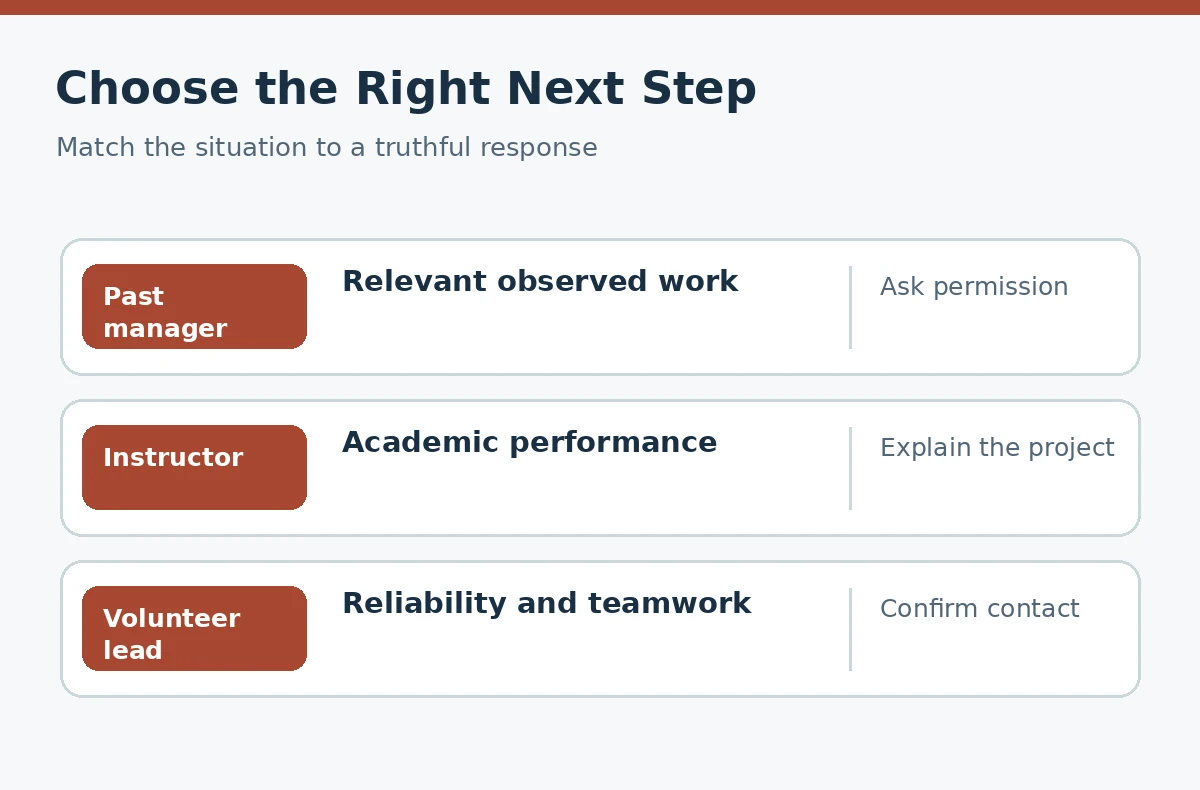
CareerOneStop’s reference guide recommends asking permission before sharing a reference’s name and contact information. The selection matrix below helps applicants choose people who are genuinely familiar with their work, including candidates without a long paid employment history.
Understand What Each Reference Field Actually Means
A typical form might ask for the person’s full name, title, organization, relationship to you, phone, email, and years known. Those are separate facts. Your former supervisor’s current job title may have changed since you worked together, so confirm what they want listed. Enter only the details the application requires; do not expose home addresses or personal numbers when a professional contact method will satisfy the form.
Some applications separate references from contact information for past supervisors. Read these questions carefully. A listed manager in employment history is not necessarily an endorsement, while an agreed reference is someone prepared to speak on your behalf. Do not claim someone is a reference until they accept. For more detail, our guide to references on a resume looks at when to make a separate reference sheet.

Choose Someone Who Can Describe Observable Work
Former managers, colleagues, clients, mentors, instructors, or volunteer supervisors can provide useful perspectives depending on the job and employer rules. A person with an impressive title but no direct knowledge of your work may be a weaker reference than a project lead who saw you deliver reliably. CareerOneStop distinguishes employment, professional, academic, and personal references.
For a recent graduate, an instructor who supervised a real group project may be more informative than a distant acquaintance. For someone returning after a career break, a volunteer coordinator might be able to discuss recent organization and follow-through. A hypothetical example: an applicant for a front desk role asks a volunteer events supervisor who observed scheduling and guest communication, rather than a family friend who has never seen the applicant work.
| Person | Can discuss | Important limit |
|---|---|---|
| Former supervisor | Directly observed paid work | Confirm role and permission |
| Academic instructor | Projects and learning | Relevant for early career |
| Volunteer coordinator | Reliability and service | Do not imply paid employment |
| Personal contact | Character | Only if employer permits |
Request Permission Before Adding Contact Details
Ask directly whether the person is comfortable serving as a reference for this type of role. Mention which jobs you are targeting, the relevant responsibilities, how employers may contact them, and when calls might occur. The University of Pennsylvania’s Career Services guidance recommends respecting a reference’s time and providing a resume or useful context.
If the person declines or does not answer, do not list them as confirmed. Find another suitable reference. If the person agrees to email contact but not phone calls, honor that preference and verify that the employer’s form allows it. For a current supervisor whom you have not informed about your search, consider whether the application permits a different contact or includes a “do not contact” option.
Match the Relationship Label to the Real Connection
Write “Former team lead,” “Project instructor,” or “Volunteer coordinator” only if it accurately describes the relationship. Avoid inventing reporting lines. If the person was your coworker but not manager, say coworker. If you collaborated for a short project, do not claim a multiyear relationship to make the reference appear stronger.
Where the application has a free-text explanation, keep it simple: “Supervised my work on a semester-long community outreach project.” That tells the reviewer what the person observed without pretending to an employment relationship. An accurate relationship helps a reference prepare for the right questions.
Handle Missing References and Current-Employer Concerns
If you have no former manager available, look at other categories the employer accepts. Teachers, internship supervisors, community project leaders, or clients may be appropriate. If the form requires only employment references and you cannot meet that requirement, contact the hiring team using an official channel instead of inventing contact details. Our walkthrough on how to format a resume reference sheet and protect contact details sets out each step.
A request to contact your current employer can be delicate. Check for the portal’s confidentiality option and consider asking the employer what it needs at this stage. Do not assume a checkbox blocks every possible verification process; actual procedures and legal rules vary. If a contact becomes unavailable, update the employer if a reference check is expected.
References sometimes ask to understand exactly when they might hear from the employer. You can say you are applying now but do not know whether the organization will contact references or at what stage. Avoid promising that a reference will definitely be called. When a portal requires three names but you only have two people who have agreed, do not manufacture a third person; contact the employer for options and keep building legitimate professional relationships. You can also prepare a simple briefing for each reference: the job title, two skills the role requires, and an honest reminder of work they personally observed. Do not write a fake endorsement for them. If your reference requests not to be contacted anymore, honor that and update any pending list where feasible. Our guide “Job References” adds more detail on this.

Double-Check Accuracy and Keep a Private Reference List
Confirm spelling, current organization, preferred contact method, and the reference’s permission just before submitting. Keep the list in a private document, not in a publicly visible resume profile. Do not upload a full contact sheet to third-party services that are not needed for the employer’s stated application process. For the fuller picture, see our guide to filling out a job application with no experience.
After someone gives you a recommendation, thank them. Let them know the outcome if appropriate and ask before using their details for a materially different search. These small steps protect a professional relationship and reduce the likelihood of an unexpected call.
How We Research and Check Our Advice
For factual guidance, we checked CareerOneStop reference guidance, Penn Career Services reference advice, CareerOneStop job application guidance. These sources describe good application practices, not private employer rules or guaranteed screening outcomes.
Sources, Examples, and Affiliate Disclosure
Sources checked October 21, 2026: CareerOneStop reference guidance, Penn Career Services reference advice, CareerOneStop job application guidance. Each citation supports only its stated advice; employers may use different application fields and review processes. All sample answers, cases, names, and messages in this guide are hypothetical, not real hiring results. There are no approved affiliate relationships or compensated product links in this article. See the JobAsk affiliate disclosure for sitewide information.
Related Job Search Guides
- Common Online Job Application Mistakes: A Field-by-Field Audit
- References on a Job Application: Permission, Fields, and Privacy
- How to Apply for an Internal Job Opening: Policy and Fit
- How to Follow Up After an Online Job Application
- Found a Typo in a Job Application? Decide What to Fix
Yes, when the employer accepts colleagues as references and that person can discuss your work. Label the relationship accurately.
You need not report every click, but confirm permission and update them when a new type of role or an expected reference call makes context useful.
Prefer people who have observed your work or projects. A personal reference may be allowed for some applications, but follow the employer’s rules.
Ask for their current preferred contact details and update the application or recruiter through an approved process if necessary.
Usually they can be supplied separately when requested. Include them in the application only when the employer asks and the people have agreed.