
Restaurant host experience on a resume is stronger when it explains how you guided guests through arrival, waitlist updates, seating and handoffs to servers. State your actual job title, venue, employment dates and the tasks you controlled. A host may monitor reservations and communicate table availability, but that does not automatically mean they assigned server shifts, controlled kitchen timing or supervised the entire dining room. Select verifiable examples that show patience, record accuracy and teamwork under the restaurant’s own procedures.
Begin with the dining-room workflow you actually handled
A host’s shift may start with checking reservations and table sections, preparing a waiting list and confirming which areas are available. Write down the steps you performed rather than the glamorous picture of “running the restaurant.” Did you greet guests, check bookings against a system, communicate quoted waits, or escort parties to tables? A small dining room and a large banquet restaurant can use different processes; name yours only if the distinction helps the target employer understand the responsibilities.
For a fictional example, consider “Maintained an arrival list and relayed seating changes to the serving team during service.” This describes the process clearly. If your role was exclusively greeting guests, do not adopt the waiting-list claim. If supervisors assigned tables, say you communicated their assignments rather than making the decisions yourself. On a resume, the line between accurate coordination and exaggerated management authority can be as simple as choosing “supported,” “updated” or “communicated” instead of “directed.”
Describe reservation and waitlist accuracy without false metrics
Reservation records can require checking party size, arrival time, accessibility requests that the guest volunteered, and whether a table is ready. Those details belong in the restaurant’s authorized booking system, not in a personal sample portfolio. To show accuracy, describe how you confirmed bookings or updated a waitlist when parties arrived, left, or changed their plans. A practical bullet could be “Updated waitlist entries and kept the floor team informed of changes in party size and arrival order.”
If you know real counts from a reliable work record, clarify whether they are reservations, seated parties or guests and which period they cover. Otherwise leave numbers out. “Handled 300 guests nightly” becomes misleading when the number belonged to the entire venue rather than your shift or station. A useful outcome can be procedural: the list stayed current for handoffs, a server received timely changes, or guests were told where to wait. Keep results within the tasks you can genuinely explain.

Make guest communication specific and courteous
Front-of-house work includes answering questions, estimating a wait using the restaurant’s current information, managing expectations and knowing when to involve a lead. Do not turn a difficult interaction into a fictional five-star review. For instance, “Explained updated wait estimates to arriving parties and referred seating exceptions to the shift lead” captures both service and judgment. If the restaurant used a pager or messaging tool, mention it only if you actually operated it and it is relevant to the position you want.
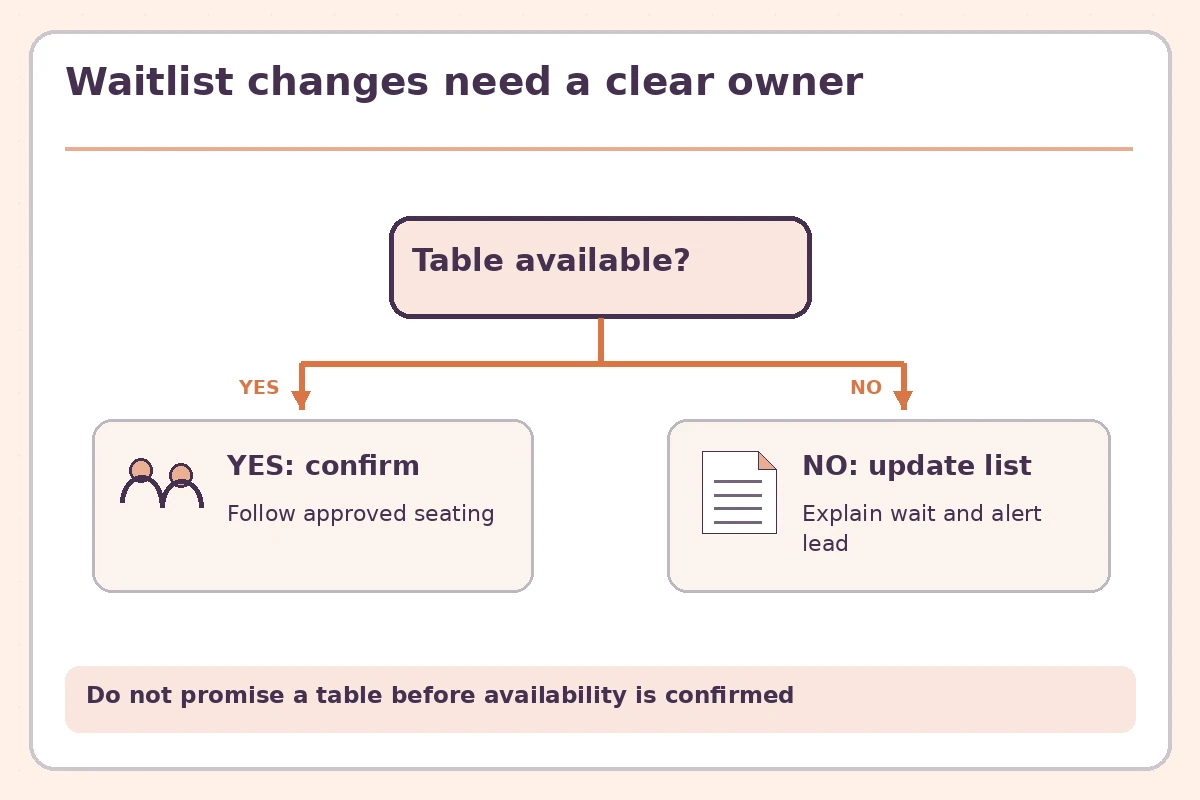
An employer may care about your communication under pressure more than the number of tables. Prepare one non-identifying example of how you kept guests informed during a busy period. Describe what you observed, what you said and what staff needed to know next. Never promise that a seat was available when you could not verify it, and never claim authority over dietary or allergy assurances you were not qualified to make. Referring those matters to the proper team is itself a responsible action.
Show the handoff between host stand and servers
The host stand is a coordination point: new arrivals, cancellations and seating changes affect the people serving tables. A good bullet names an observable handoff: “Relayed seating changes to servers and updated reservations as guests arrived.” It avoids claiming you set staffing levels or directed every table assignment. If your role included preparing menus, supporting an accessible seating request or checking table readiness, describe the exact assigned work rather than the broad claim “managed operations.”
If you sometimes helped reset tables or package takeout orders, separate that support from the main host responsibilities. A resume can show versatility without confusing the hiring manager about where your expertise lies. For example, mention “Assisted with menu distribution and takeaway pickup coordination during assigned periods” only if true. The responsibility for food preparation, charges and financial adjustments depends on the business; do not suggest you authorized changes because you delivered a message about them.
Choose bullets for customer-facing or office work
For another restaurant host job, emphasize guest flow, reservations and real waitlist practices. For a hotel reception role, explain appointment-style scheduling, greeting and quick handoffs using terms the hotel will recognize. For a general administrative position, translate the same tasks into accurate records, real-time updates and communication with multiple teams. Avoid copying restaurant-specific terms into an unrelated application without saying what they mean. Relevance changes the emphasis, but should not change the facts.
One useful editing test is to underline the action verb and the object of each sentence. “Helped customers” has no clear object beyond the broad audience. “Confirmed bookings and notified servers when party sizes changed” has both. Add a short reason for the action where it truly improves understanding, such as maintaining a current queue. Do not attach a customer satisfaction percentage that you did not collect. Clear scope gives the reader more confidence than a decorative performance claim.
Compare a vague bullet with a defensible revision
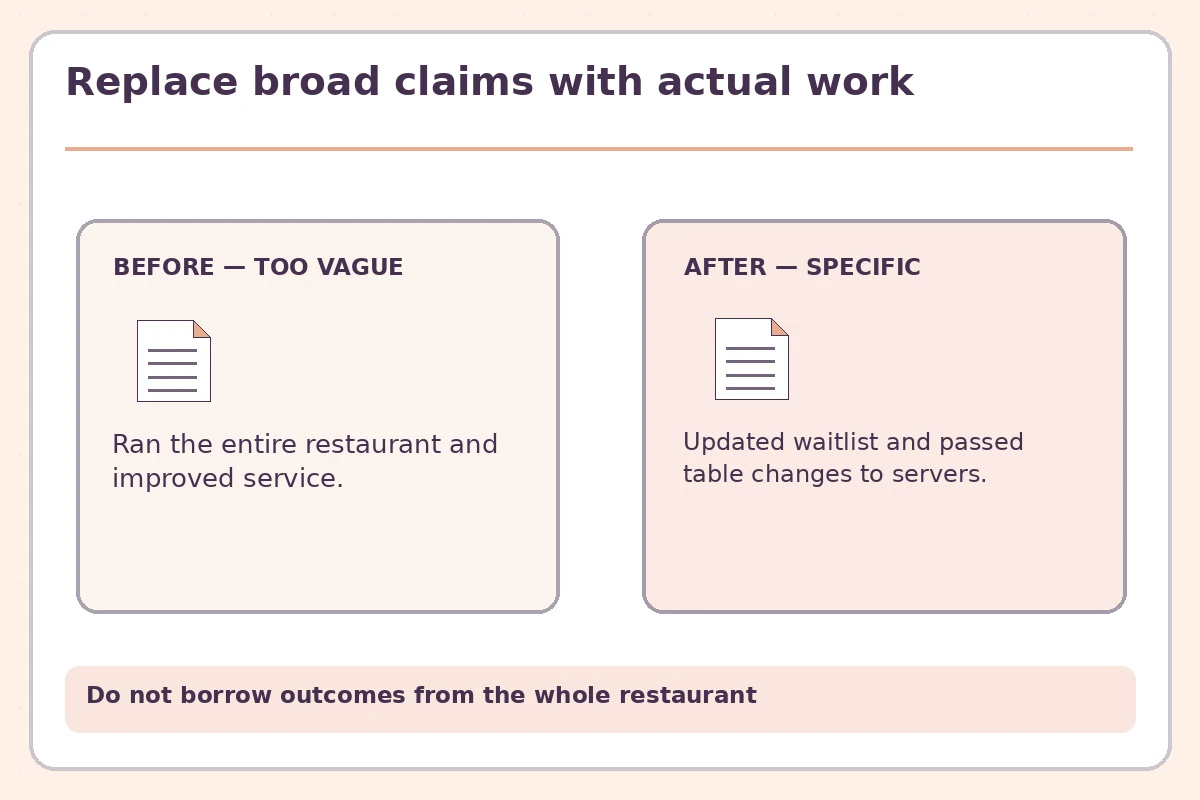
Weak: “Ran front-of-house service and increased efficiency.” It may claim a managerial scope the host never had and invent an outcome without evidence. Better, for a person who did these tasks: “Greeted guests, maintained reservation and waitlist updates, and coordinated table-ready notices with servers.” This is an illustrative rewrite, not a real restaurant’s description. Check that every verb is accurate before adapting it. If a supervisor owned the reservation system, write what you observed or relayed instead.
Review the final resume for consistent dates and an identifiable employer. Part-time and seasonal host work counts as work experience when listed honestly. Do not remove useful jobs simply because they were short, but you can use fewer bullets for older or less relevant roles. Before submitting, make sure your title has not quietly changed from Host to Dining Room Manager and that “reservations” does not imply you managed revenue, scheduling or service decisions outside your actual role.
How We Research and Check These Examples
We compared occupational duties and established resume-writing principles against the primary resources below on 2026-11-10. The role-specific bullets and process diagrams in this article are fictional teaching examples, not verified employment histories, proprietary forms, sample patients, customers, students, donors, or real outcomes. The sources support the boundaries and common tasks; they do not establish what any particular applicant was authorized to do. BLS — BLS describes hosting as greeting, seating, reservations and waitlist management, separate from other service occupations. CareerOneStop — CareerOneStop recommends accurate roles, dates, responsibility descriptions and relevant accomplishments in work experience. University of Colorado Boulder — University of Colorado Boulder discusses action, task and result statements, and nontraditional experience without title inflation. University of North Georgia — University of North Georgia recommends truthful titles, organization, dates, relevant work and reverse chronological presentation.
All examples are independent educational material, not employment verification or legal advice. Do not reuse personal records or protected workplace material in a portfolio. Review the JobAsk affiliate disclosure; this guide does not represent an approved paid partnership with the cited organizations.
More Resume and Cover Letter Guides
Yes. Show the real employer, dates, duties and seasonal nature if helpful. Do not imply a full-year role when you worked only a season.
Describe exactly what you did, such as confirming names against bookings. Do not claim control of reservation changes without that responsibility.
Write that you followed seating assignments or relayed updates, not that you managed table allocation.
Use only trustworthy, relevant counts and specify the unit and period. Guest volume for the whole restaurant is not automatically your own workload.
It can demonstrate record updates, scheduling awareness and communication, especially when your bullets describe verifiable actions.