
Leadership behavioral interview questions seek a specific time you helped others move toward a result. You do not necessarily need a manager title. You do need a truthful account of what you organized, proposed, clarified or followed through on, alongside the decisions that belonged to someone else. A credible answer makes the team outcome visible without presenting every teammate’s work as your own leadership achievement.
Penn Career Services lists examples of leadership and group contribution; Northeastern University notes that leadership questions can be answered without managing employees. These sources support using clear past episodes; they do not turn every volunteer task into formal supervision or guarantee a hiring decision.
Identify Which Form of Leadership the Prompt Means
Listen for whether the interviewer asks about motivating a team, taking initiative, influencing a decision, helping someone learn or coordinating delivery. Those are related but not identical. For influence, the strongest evidence may be a proposal that others evaluated. For coordination, it could be clarifying owners and dependencies. For coaching, explain what feedback or information you gave and how the other person used it, if you know.
Do not begin with an abstract leadership philosophy and leave out the event. Identify a decision point: a confusing responsibility list, an overdue deliverable, inconsistent customer instructions or a new teammate lacking context. Pick an episode where your contribution is traceable. If the interviewer asks about leading people and your experience is only in school, say that plainly rather than inventing a department or direct reports.
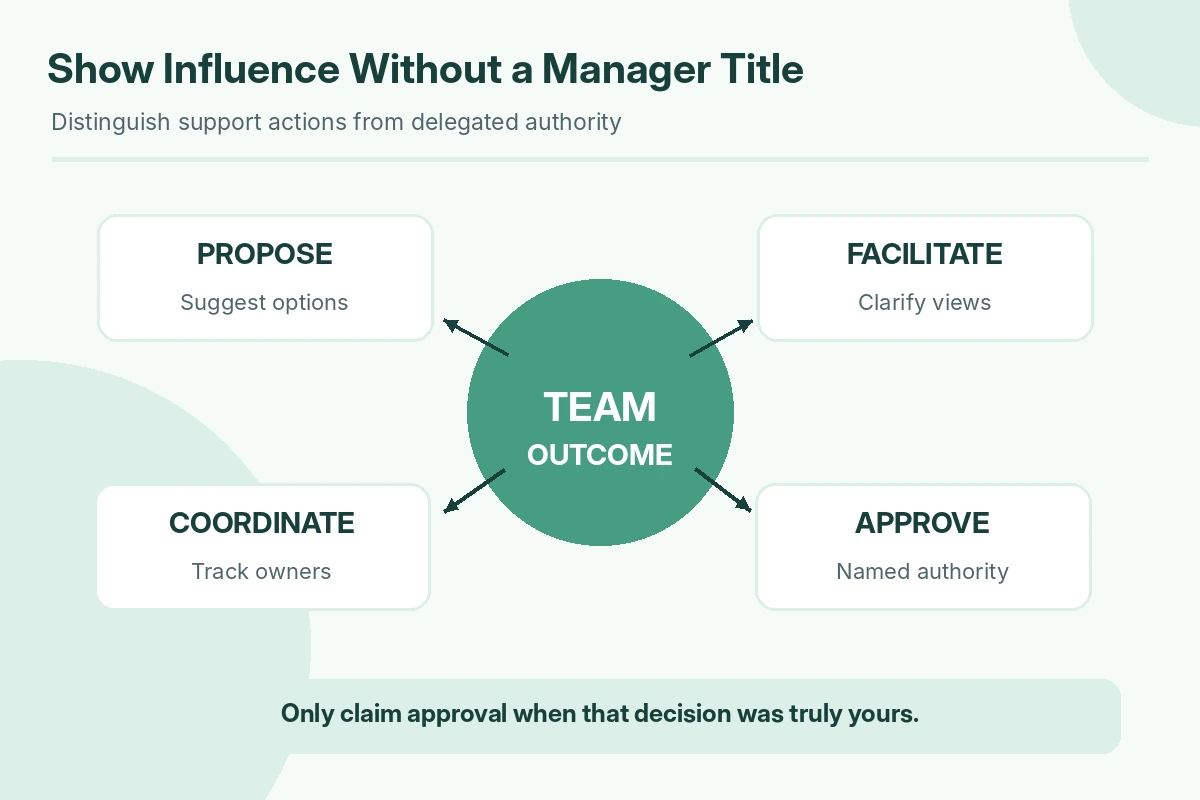
Separate Initiative, Coordination and Authority
Starting a spreadsheet of responsibilities can show initiative; assigning legally or contractually binding duties is a different kind of authority. Facilitating a meeting can show coordination; approving the final project plan may have belonged to a supervisor. Distinguish what you proposed, what you were authorized to decide, and what other people independently contributed. This protects your credibility if the interviewer probes details.
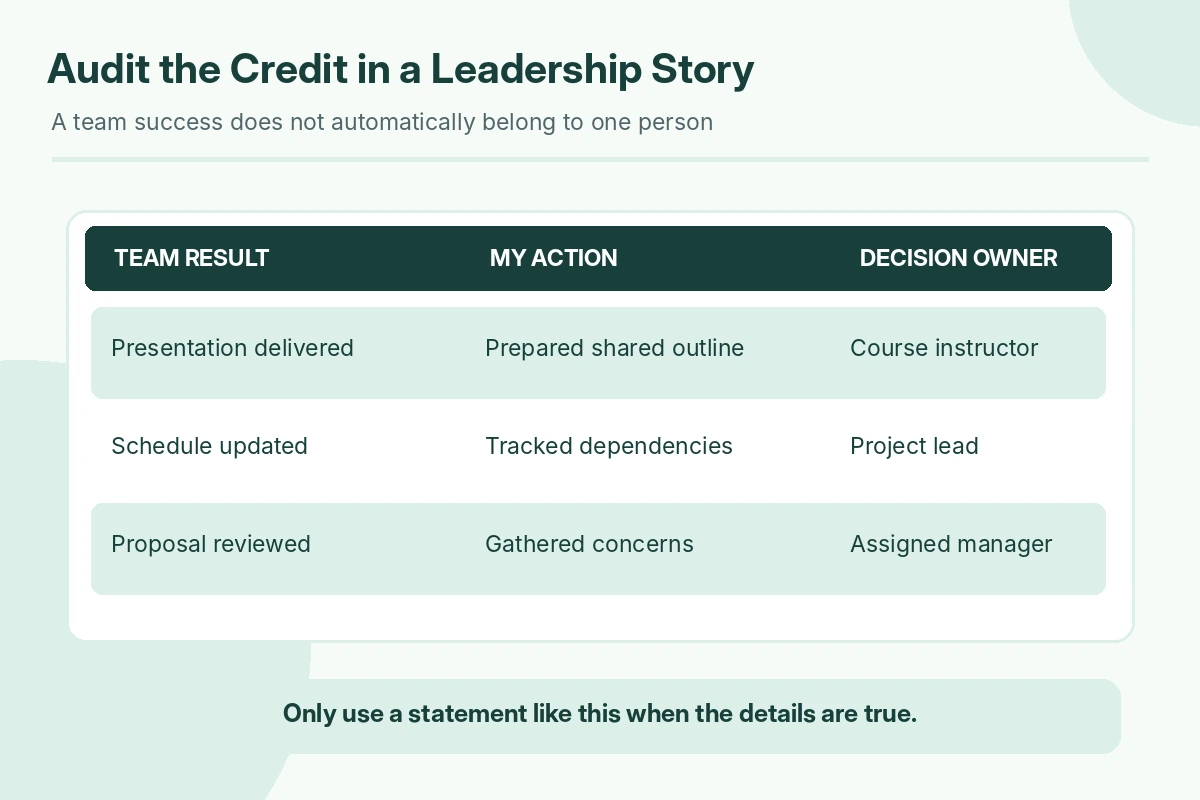
A four-column note can help: challenge, action I owned, decision owner, result actually observed. For example, you may have gathered concerns and suggested a revised timeline while the lead approved it. “I supported the timeline revision by organizing dependencies” is stronger than “I led strategic transformation” if the second claim inflates the role. Authority boundaries make the answer more precise, not less impressive.
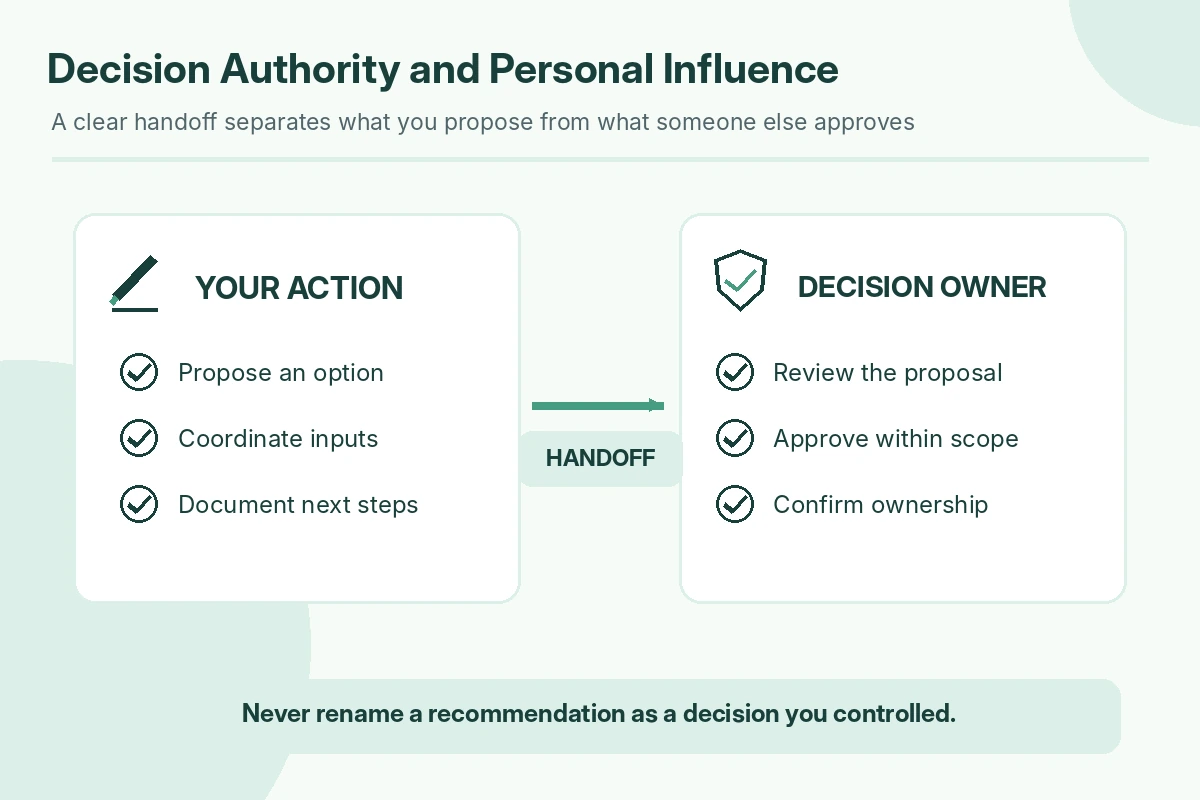
Choose an Episode That Shows People Following a Clear Plan
A useful story illustrates how you made the next action easier for others. Perhaps you organized a student volunteer team around a venue change, helped teammates agree on handoff times or created a checklist that another person adopted after review. Describe how you heard concerns, prioritized tasks and checked progress. Avoid claiming team enthusiasm or productivity improvements you did not measure.
Hypothetical example: “During an academic research presentation, our group had overlapping topics. I proposed a shared outline, asked each participant to confirm their section, and created a rehearsal checklist. The instructor reviewed the outline; I did not assign grades or claim ownership of the team’s research. We delivered the presentation, although I do not have a metric for improved performance.” This is a fictitious teaching example, not an actual accomplishment.
Handle Resistance Without Inventing Consensus
If someone objected to your suggestion, state their concern and how you responded. Did you ask for an alternative, compare two approaches or seek a decision from the recognized owner? Leadership can involve adapting your original plan after feedback. Saying you won everyone over may sound less believable than reporting that the team adopted a compromise after a scheduled review.
Case Western Reserve’s leadership/influence guidance asks candidates to discuss cooperation without formal authority. It also distinguishes willingness to influence from willingness to be influenced. Your story can demonstrate both: a useful idea proposed and a legitimate objection incorporated. A team member’s resistance is not evidence that they were unreasonable. Keep the focus on the decision and the people affected.
Explain the Result Without Taking Collective Credit
Specify whether your contribution produced a visible artifact such as a schedule, documented handoff, clarified role list or approved plan. If the team met a deadline, separate the team result from your part. Do not credit yourself with each deliverable or a budget you never managed. A later decision made by an executive is not your personal result solely because your notes were part of the discussion.
When there was no measurable improvement, report the concrete status: “The team confirmed owners for the remaining tasks” or “the project lead accepted the revised schedule.” If you cannot verify adoption, say you proposed the change, not that you implemented it. If the result was mixed, show what you learned about timing, feedback or early clarification. A defensible outcome is enough.
Practice Follow-Ups on Scope and Influence
A mock interviewer can ask: “Who had final approval?”, “Which action did you take yourself?”, “How did you get buy-in?”, and “What changed after the discussion?” If your answer relies on vague verbs like “oversaw,” replace them with specific actions you can substantiate. If you used tools, mention them only when you genuinely did. If you did not delegate, do not use the word just to sound senior.
Keep a second example for an interviewer who distinguishes coaching from operational coordination. A small experience may be ideal if it contains a clear decision and your actual contribution. University of San Francisco’s leadership prompts emphasize concrete instances of leading projects and building cooperation. Your preparation should reveal evidence and limits rather than manufacture a management title or authority.
How We Research Behavioral Interview Answers
This guide draws from University career center, career services guidance, University career center, career services guidance. The sources explain the purpose and format of behavioral questions, show example prompts, or discuss how to specify individual actions. They do not prove any hypothetical outcome, official interview score, universal script, or guaranteed offer. Source pages were checked on October 26, 2026; the article’s decision models are independent educational tools.
Every modeled candidate experience above is explicitly hypothetical and is not a true hiring success story. Do not disclose confidential details, invent credentials, take credit for team results, or present unverified numbers as your own. No paid affiliate relationship is claimed. Read our affiliate disclosure.
More Interview Preparation Guides
- Accountability Behavioral Interview Questions: Show Ownership and Follow-Through
- Behavioral Interview Questions: Match Common Prompts to Real Evidence
- Adaptability Behavioral Interview Questions: Explain a Changed Plan
- Ambiguity Behavioral Interview Questions: Clarify Uncertain Instructions
- Attention to Detail Interview Questions: Explain Checks and Error Prevention
Yes. Use a real occasion when you influenced, organized, guided or supported others, and describe the setting and authority accurately.
Name the shared outcome, then separate your own documented action from other people’s contributions.
Yes, if the role, tasks and decision limits are honestly described.
No. Say whether you proposed owners, coordinated assignments, facilitated discussion or had real delegation authority.
Explain the proposal, feedback, decision owner and what you did next; do not invent consensus or results.