
Catering assistant interview questions tend to combine event setup, time-sensitive service, food handling, and teamwork. Your answer should show how you follow an event plan, check responsibilities with the lead, respond to a guest request without making unsupported promises, and report food-safety concerns through the approved channel. Do not claim chef, allergen, or safety-certification authority you do not have.
What a catering assistant is asked to demonstrate
Catering assistants may help move supplies, prepare serving areas, set up trays, replenish stations, and restore a venue after service. The exact duties depend on the company, event, and training. The Bureau of Labor Statistics describes food preparation workers as supporting cooks and managers with preparation, supplies, cleaning, and other assigned tasks. A catering interview often tests whether you can complete those tasks on time while communicating changes clearly.
Do not confuse support work with designing menus, directing a whole event, or authorizing food-safety decisions. Read the posting carefully: some roles are mostly front-of-house service, while others involve back-of-house preparation or transport. Prepare separate examples for organization, teamwork, and following instructions.
How would you prepare for an event setup?
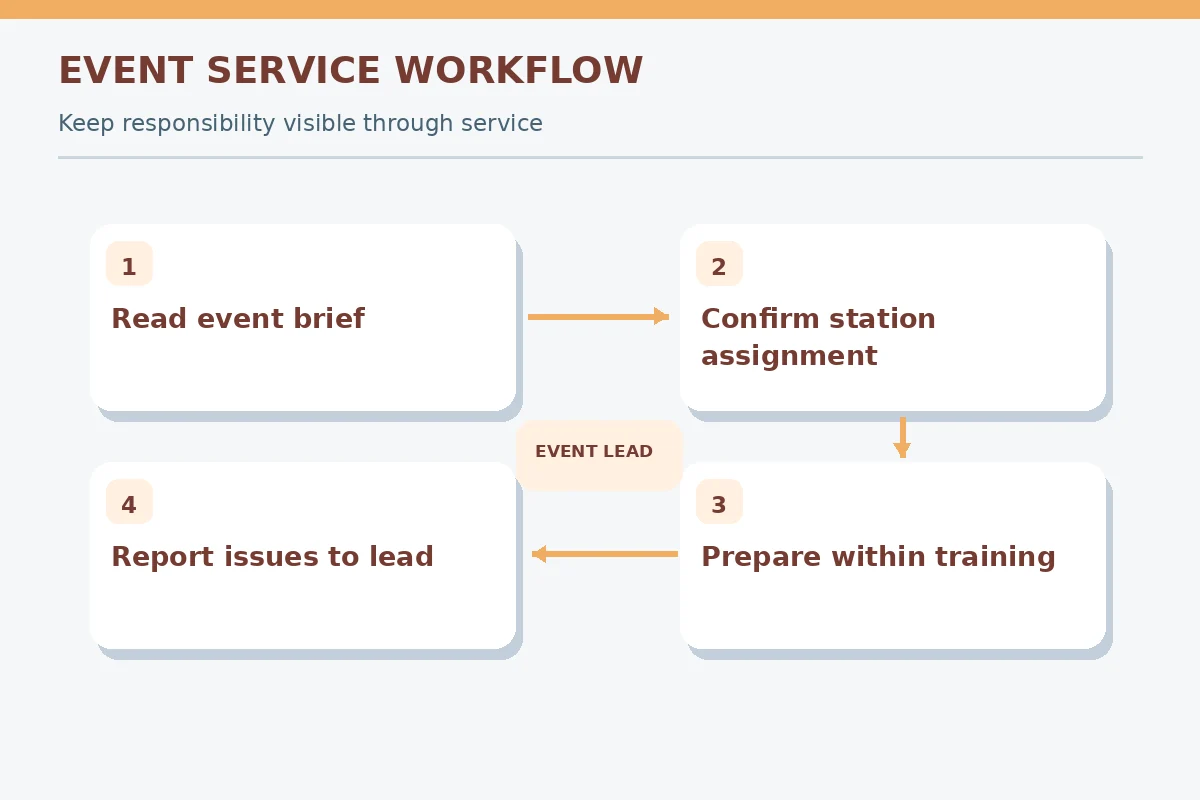
Begin with the event sheet or supervisor briefing: expected service time, assigned station, equipment checklist, venue rules, and who has decision authority. You would confirm the supplies and safely report missing or damaged items rather than substitute unknown equipment. If guest numbers change, explain that you would relay the information to the event lead before rearranging service plans.
A practice answer could be: “I would review my station list, check what needs to be ready before guest arrival, complete the approved setup, and tell the lead about anything missing.” An interviewer should hear your ownership of an assignment, not a claim that you independently manage the entire event.
What if a guest reports a food allergy?
This question needs a careful answer. Do not guess whether a dish contains an ingredient, promise that food is safe, or make a substitution outside the approved process. State that you would acknowledge the request, stop speculation, refer it to the designated food safety or kitchen lead, and provide only confirmed information through the employer’s procedure.
Use a hypothetical line such as: “I want to make sure you get accurate information. I will check with the person responsible for our ingredient and allergen guidance.” If the employer provides formal training for the role, mention that you would follow it. Avoid asserting that a particular certificate is mandatory everywhere; requirements vary by employer and jurisdiction.
How would you respond if service runs behind?
A catering assistant can help by identifying the actual bottleneck and communicating it, not by skipping checks. Suppose trays are delayed from the kitchen. The useful response is to confirm status with the assigned lead, replenish approved items already available, and keep your work area ready. Do not tell guests a precise delivery time without information from the person controlling production.
Discuss a realistic example of working toward a deadline: organizing club event materials, packing supplies for a school program, or preparing a volunteer service station. Make your contribution clear and avoid giving yourself credit for the kitchen team’s work.
How do you handle a last-minute layout change?
Changes to table locations, power access, guest flow, or delivery paths may affect more than your own station. You should report the request, clarify who approves it, and use the revised plan when authorized. An event lead may need to coordinate with venue staff before anything moves. Saying “I would move everything immediately to keep the client happy” ignores access and safety considerations.
In your example, mention how you protected the original instructions, checked the revised assignment, and told the next shift or service team what changed. For catering, a clear handoff can matter as much as a fast setup.
How do you show good teamwork during service?
Use specific communication behaviors. You might tell a coworker which trays have been replenished, identify a shortage in time for a supervisor to respond, or clean your area before leaving a shared task. When a guest complaint involves menu quality, give the guest a respectful acknowledgment and route the issue to the lead rather than argue or authorize a refund.
Interviewers can ask for a time someone disagreed with you. Describe listening, checking the shared plan, and escalating a genuine conflict about responsibilities. Avoid a heroic story where you secretly take over someone else’s station or bypass the manager.

What would you do after an event ends?
Closing tasks are part of reliability. Depending on assignment, you may check your area, sort reusable supplies, record shortages, clean authorized equipment, and return items to their designated storage point. The employer’s food handling and cleaning procedures govern what is appropriate; do not suggest an untrained worker use unknown chemicals or equipment.
Practice explaining a final check and handoff: what you finished, what equipment needs attention, and what remains for the event lead. A truthful event volunteer example is useful, especially if you explicitly distinguish school or charity work from commercial food service.
A sample answer for someone without catering experience
Candidates can use customer service, club events, volunteer setup, or organized group projects. The key is to show sequencing and limits, not pretend to have managed a banquet. Example, explicitly hypothetical: “At a community event I checked a setup list, arranged assigned supplies, and alerted the organizer when we were short on materials. I stayed to help return equipment and noted anything missing.”
Finish with a learning statement linked to this role: “I would use that checklist habit while learning your catering schedule and food handling procedures.” Do not claim you have prepared particular foods, operated commercial appliances, or passed food safety training unless those statements are verifiable.

How We Research and Verify Interview Advice
We compare each question with occupation-specific duties described by the Bureau of Labor Statistics and the U.S. Office of Personnel Management structured-interview guidance. CareerOneStop recommends preparation with evidence from actual experience. We distinguish past-experience questions from hypothetical situations, check that examples do not imply permissions beyond the job, and avoid promising hiring results. Specific employer procedures may differ. See our affiliate disclosure; this informational article does not presume an affiliate arrangement.
More Interview Preparation Guides
Not necessarily; some support roles include on-the-job training. Read the specific posting for food handling, equipment, scheduling, and prior-experience requirements.
Do not guess or guarantee that a dish is allergen-free. State that you would follow the employer’s approved process and refer the question to the designated trained person.
Yes, identify it honestly as volunteer or school experience and describe the supplies, timing, communication, and handoffs you handled.
No, not without authority. Explain that you would listen and route the request to the person responsible for menu and service decisions.
Discuss clear communication with the lead and safe completion of your assigned tasks, including any authorized schedule or handoff changes.