
What this skill should look like in a resume
Conflict resolution skills belong on a resume when you can point to a real disagreement or service issue, explain how you listened and clarified needs, and describe what happened next. Avoid “resolved every conflict” or “expert mediator” if your actual role was to document concerns or involve a supervisor. Good evidence can come from customers, volunteers, project teams, or workplace coordination. The key distinction is between helping people reach a practical next step and exercising formal authority you did not hold.
Define the kind of conflict you actually handled
Not every disagreement is a formal grievance or mediation. It might be a scheduling misunderstanding, competing requests, unclear handoff, conflicting project priorities, or an upset customer seeking a policy exception. Describe the situation at the level you handled. A retail associate who explained store policy and summoned a shift lead demonstrated service recovery and escalation, not independent approval of a refund. A student who helped teammates assign tasks can show coordination without claiming to adjudicate a workplace dispute.
Start with listening and accurate clarification
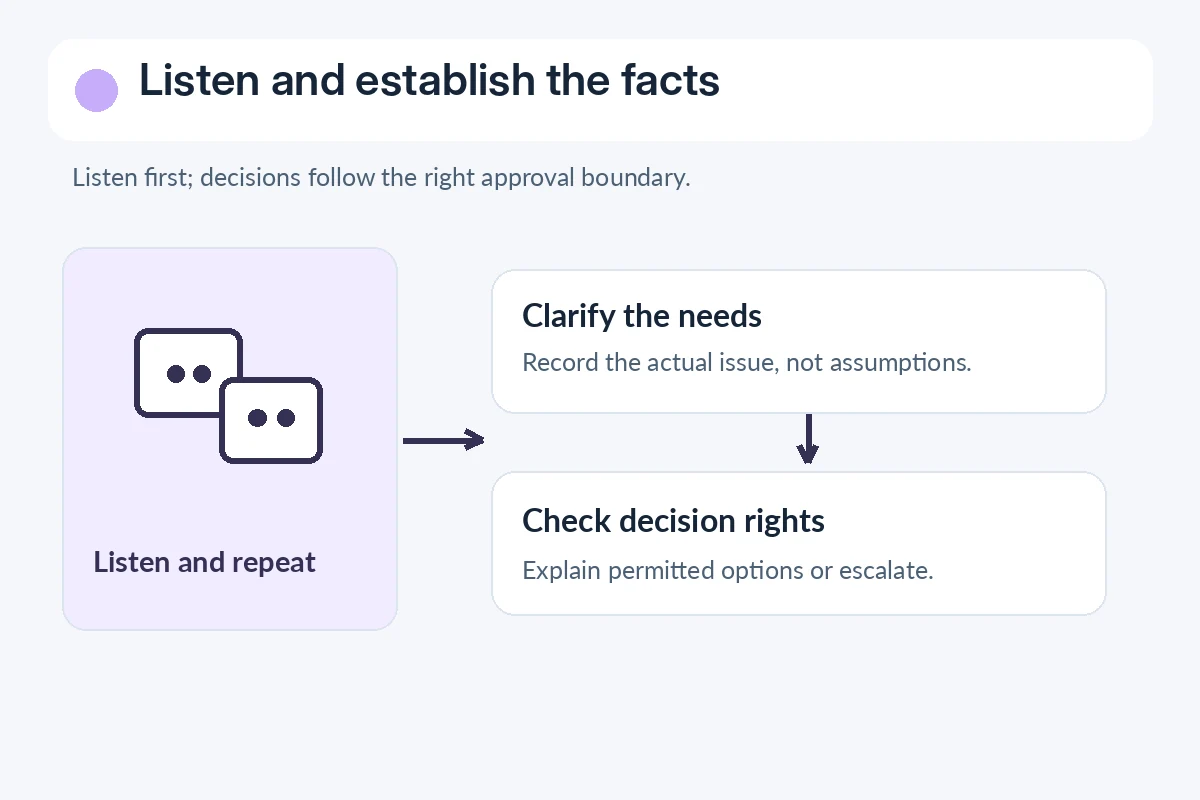
O*NET describes active listening as giving attention, understanding the points being made, and asking appropriate questions. A resume can make that visible by naming the actions: summarized the request, confirmed the competing needs, checked the policy, or separated facts from assumptions. “Listened to upset callers” alone does not explain a skill; “clarified callers’ concerns and logged the missing details for support follow-up” identifies a process. Avoid claiming you changed someone’s emotions or behavior unless you have specific, appropriate evidence.
Know when to escalate instead of negotiate
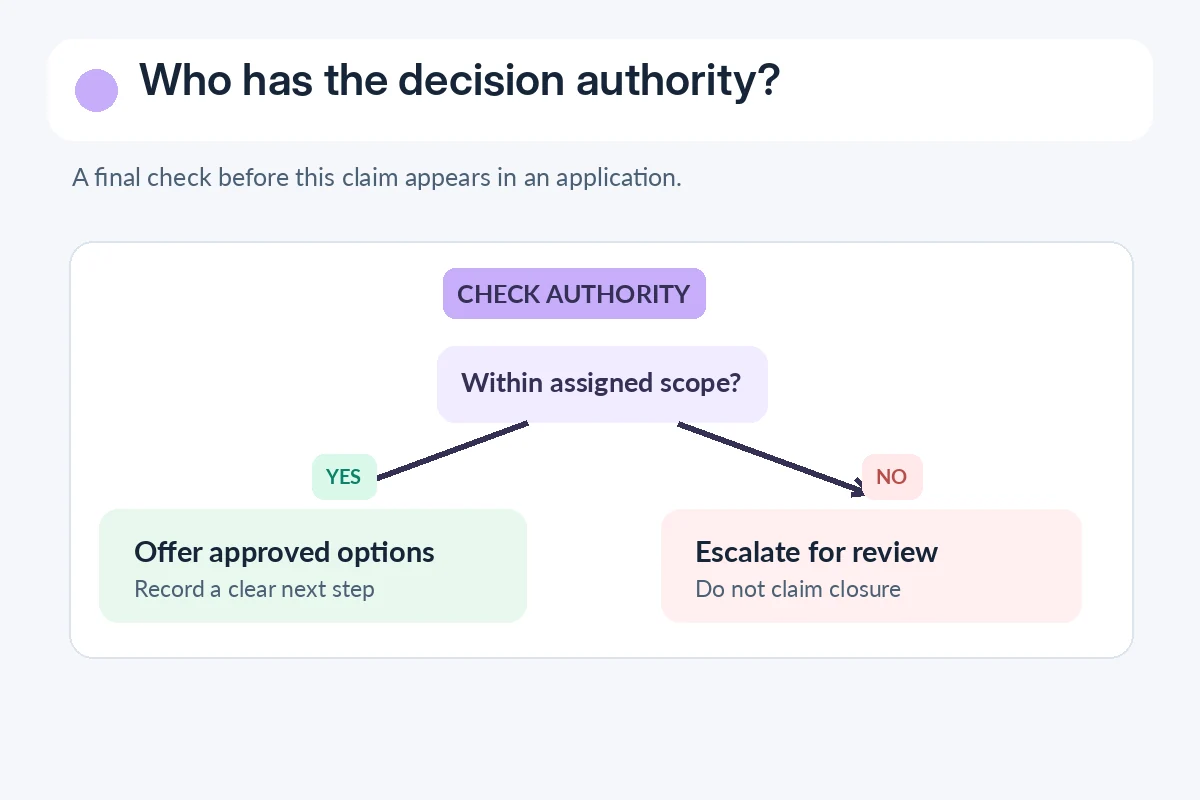
Some issues require a supervisor, HR, safety contact, licensed professional, or formal process. A front-line employee may explain approved options but cannot rewrite policy or investigate protected complaints alone. This is especially important for threats, discrimination allegations, medical information, and security incidents. Your resume should not recast a referral as a closed case. A defensible bullet shows that you identified the issue, protected confidential details, and routed it to the authorized person. Sound judgment is a transferable skill.
Turn disagreement into a clear next step
Where the dispute is within your responsibility, describe how you clarified shared facts and proposed options. For a project timeline conflict, you might gather availability, document dependencies, and confirm the plan with the project owner. For a volunteer rota, you might compare schedules and ask the coordinator to approve a swap. The work is often in communicating a workable choice, not winning an argument. Do not imply consensus if others merely acknowledged the plan or if the underlying problem remained unresolved.
Rewrite a customer conflict claim truthfully
Illustrative example: “Resolved all angry customer complaints independently” is unsupported and potentially inaccurate. A more defensible line is “Clarified customer concerns, explained approved return options, and escalated exceptions to the shift supervisor.” This demonstrates listening, policy knowledge, and a defined approval boundary. If you did not personally explain returns, use the actual workflow. If the complaint led to a follow-up ticket, mention the ticket rather than inventing satisfaction ratings or refunds. Specific restraint often reads as professionalism.

Show collaboration without claiming management authority
Group work produces real conflict-resolution evidence when the candidate facilitated task assignments, summarized open issues, or arranged a review. Identify whose decision it was. “Documented conflicting deadlines and proposed a revised order for the project lead to approve” is different from “directed cross-functional strategy.” If you were the lead, say what authority you actually held; if you were a peer, keep the peer role visible. A truthful account makes teamwork easier to evaluate and protects against exaggerated promotion or supervisory claims.
Choose between a skills label and an experience bullet
A job listing may mention negotiation, conflict management, de-escalation, or customer service, but those phrases do not have identical meanings. Use the exact term only when you can explain a relevant behavior. Put the proof in a bullet under the real job or project. A short skills line may help for a role that genuinely emphasizes the competency, but it cannot replace a situation-action-outcome example. Avoid turning ordinary cooperation into a claimed certification in formal mediation.
Protect privacy while showing results
Keep customer, employee, patient, and student identities out of any resume examples. Avoid quoting confidential complaints or sharing internal case files as portfolio evidence. If the outcome was a referral, say so; if a process changed after a joint discussion, distinguish your input from the authorized decision. Do not invent dispute statistics or claim everyone was satisfied. A realistic result may be simply a documented next action, a confirmed handoff, or a scheduled review. Those outcomes can still demonstrate judgment.
Prepare an interview explanation for each claim
For every conflict bullet, be able to describe the setting, what each person needed, the policy or authority boundary, what you said or did, and who approved the final action. If the issue did not end happily, explain the safe next step rather than rewriting history. Avoid attributing intentions to other people or claiming you changed a policy without evidence. A good resume invites discussion; it does not need to make the reader believe you are a trained mediator.
Adapt the example to your own verifiable history
The before-and-after example in this guide is hypothetical and is not an achievement you should paste as your own. Weak version: “Expert mediator who solved every team dispute.” Possible revision when true: “Clarified competing schedule requests, documented options, and sent exceptions to the team lead.” Replace the setting, verbs, and tools with your actual work; remove anything you cannot explain in an interview. If you participated in a team, distinguish your contribution from a coworker’s decision and never infer a numerical result that was not measured. Use the skill only when it is relevant to the vacancy.
How We Research These Resume Skill Examples
We compared the job-search intent with previous JobAsk resume subjects, used the primary and university sources below to check how work skills should be evidenced, and made the examples deliberately hypothetical. Skill terminology does not guarantee a particular hiring or applicant-tracking-system outcome. Your responsibilities, authorization, and source records determine which claims belong on your own resume.
Sources reviewed 2026-11-03: O*NET defines negotiation, coordination, social perceptiveness, and active listening as workplace skills. O*NET distinguishes negotiation and active listening in a role explicitly involving mediation. OPM describes accomplishment evidence in terms of situation, individual action, and outcome. Editorial and relationship disclosure: affiliate disclosure. No partner recommendation or guaranteed hiring result is implied.
More Resume and Cover Letter Guides
Yes, if you can describe a relevant task within your real authority, such as clarifying needs or routing exceptions.
Not necessarily. Escalation shows judgment and process discipline; do not claim the underlying issue was closed if it was not.
Only if a documented, relevant count exists and can be shared appropriately.
Yes, clearly labeled as coursework or student teamwork, with your personal actions and approved outcome.
Describe the general process without names, protected details, files, or sensitive allegations.