
Reporting skills on a resume should identify what the report covered, which approved source supplied the data, how often the report was prepared, and how errors were handled. If you compiled weekly operational counts, say so. Do not promote that work into an invented business-intelligence strategy or claim a performance improvement you never measured. Employers can understand useful reporting experience when the deliverable and your exact role are clear.
Identify the report and the decision it supported
A report can be a stock reconciliation, attendance summary, expense sheet, weekly service log, or project-status update. The word “reporting” alone does not tell an employer which of these you did. Start with the target job and select one real deliverable. Explain whether the document helped a supervisor monitor work, supported routine reconciliation, or assembled facts for later analysis.
Do not assume that producing a chart means you interpreted a trend or advised executives. An administrative assistant who collected figures and delivered a standard status sheet has a different scope from an analyst who chose a model and recommended policy changes. Both can have valuable experience. The resume should keep their responsibilities separate instead of trying to use the same inflated bullet for both.
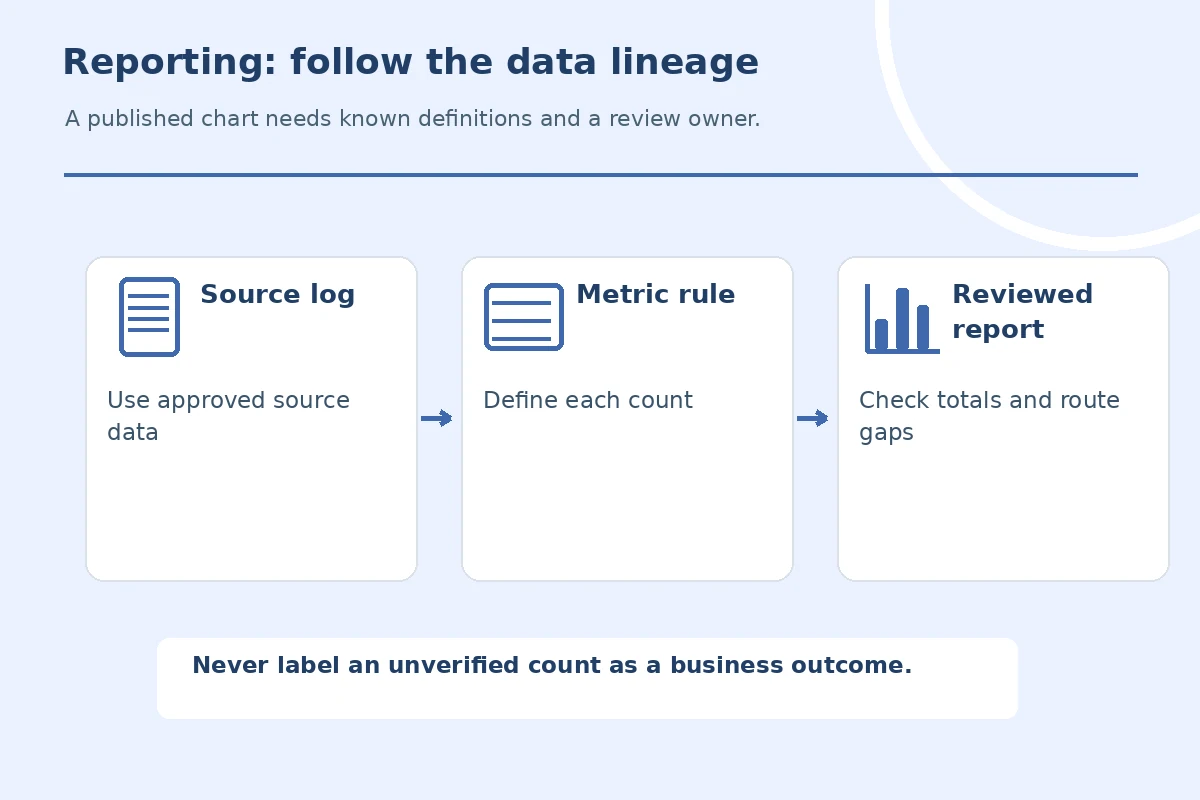
Name the source and its allowed boundaries
Credible reporting begins with data provenance. What approved spreadsheet, ticket export, register, order log, or form fed the report? Were you permitted to retrieve it, or did someone supply an extract? Explain that distinction. The O*NET profiles for analysts and accounting clerks describe a range of gathering, checking, and compiling activities without making those tasks interchangeable.
A safe hypothetical bullet could say, “Compiled a weekly service-status report from supervisor-approved ticket exports and flagged missing categories before distribution.” It does not claim ownership of the ticketing platform. If the report involved sensitive customer or employee data, do not publish a screen capture to prove your work; use invented examples and discuss the workflow.
Define the metric before claiming an insight
Words such as completed, open, delayed, revenue, attendance, and response time require definitions. A count of finished tickets is not the same as a count of closed accounts; a monthly total can differ if records were posted late. If you used definitions someone else approved, write that you followed them. If you created a metric specification yourself, name it only when that work was genuinely yours.
Consider a fictional event report. “Registrations” could mean everyone signed up, people who paid, or people who actually attended. A careful report states which measure was used and notes missing records. A resume cannot include every calculation detail, but it can convey that you checked categories and clarified the meaning before sharing a summary.

Show checks and discrepancy handling
Useful checks include comparing totals to a source list, confirming dates, reviewing duplicate identifiers, and asking whether incomplete records belong in the period. State which checks you personally performed. If you found a mismatch, explain whether you corrected it from an approved record, flagged it for the data owner, or held the report pending review.
Avoid “100% accurate” unless a real audit supports it and disclosure is permitted. A more precise bullet describes the review gate: “Compared weekly totals with the approved transaction log and documented exceptions for the finance reviewer.” This demonstrates care without implying that you certified financial statements or could authorize a correction.
Use a quick evidence and authority table
| Skill claim | What to check | Boundary |
|---|---|---|
| Source extract | Where did figures originate? | Use permitted records |
| Metric definition | What is counted and when? | No invented methodology |
| Quality check | How were mismatches flagged? | Document exceptions |
| Distribution | Who reviewed or received it? | Do not claim decision authority |
Distinguish formatting, analysis, and approval
Preparing a clean spreadsheet, calculating a pivot table, explaining why a count changed, and approving a management decision are separate activities. Name only the tasks you performed. List formulas, charting tools, or dashboard platforms when you truly used them. If your contribution was formatting an established template, that is still real work and should not be disguised as ownership of the reporting architecture.
A helpful resume may include “Excel: filters, formulas, and weekly summaries” in a skills section, backed by a bullet specifying the source and audience. It should not claim “data science” on the basis of copying figures into a chart. If you performed original analysis, describe your method and what you communicated, avoiding business outcomes that cannot be verified.
Explain report cadence and audience
Daily, weekly, monthly, and ad hoc reports create different coordination demands. Note a real cadence and how you met the review deadline if relevant. The audience also matters: shift leads need operational exceptions, department heads may need a consolidated view, and compliance staff may require a controlled record. Do not claim that a report went to executives unless it did.
Suppose you updated a weekly supply report. You might explain that you gathered approved counts, checked missing entries, and submitted the sheet to a supervisor before the team meeting. If you do not know what decision followed, do not pretend your report changed spending. The output was a trustworthy, timely handoff—that is a credible reporting contribution.

Turn the workflow into two useful resume lines
A short skills line might read “Recurring reporting; data validation; spreadsheet summaries.” The experience bullet supplies the context: “Prepared weekly inventory summaries from approved count sheets, checked incomplete items, and routed exceptions to the operations lead.” These are hypothetical templates, not claims about a real applicant. Replace every detail with your actual tools and dates.
Re-read the posting for vocabulary that genuinely fits your work. If the employer seeks dashboard development and you only prepared documents, do not borrow its technology list. A narrower but accurate bullet provides a better starting point for an interview. Review the exported PDF and ensure tables or bullets do not break in ways that obscure the source-checking evidence.
Practice with an original fictional work sample
Create a fictional service-status report with three categories: new, in progress, and resolved. Put a definition beside each category and an “as of” date at the top. Add one row whose status is unclear and route it to a named example reviewer rather than assigning an outcome. Turn this practice into a portfolio note only if labeled fictional. The exercise tests whether you can explain data provenance, metric definitions, and approval boundaries; it does not establish an actual employer performance result.
How We Research Resume Skills
For this guide we reviewed occupational task descriptions and US resume guidance on November 7, 2026: www.onetonline.org (Analysts gather information, prepare reports, and explain findings); www.onetonline.org (Accounting clerks verify records and prepare routine reports); cloudfront.careeronestop.org (Skills statements should be job-relevant and supported by evidence). Occupational profiles describe typical duties, not proof that any specific applicant has those skills. The resume bullets and work samples in this article are hypothetical editorial examples. Always confirm the job posting, your real responsibilities, permission to share records, and applicable training requirements.
This is independent resume guidance, not a paid employment offer or guaranteed screening result. No employer reviewed or endorsed the hypothetical examples. Read the JobAsk affiliate disclosure and avoid posting confidential employer records as evidence of your skills.
More Resume and Cover Letter Guides
Preparing recurring summaries, reconciling approved figures, and distributing checked status information can count when those tasks were genuinely yours.
Only if you actually built or maintained dashboards. A spreadsheet summary is a separate skill and should be labeled accurately.
No. A verified source, reporting cadence, review step, and deliverable can provide useful evidence without fabricated outcomes.
Describe the method and authorized audience without exposing internal documents or personally identifiable information.
No. Reporting can include compiling and checking information; deeper analysis may involve methods and conclusions beyond that task.