
An offer described as independent contractor, freelance or 1099 work is not automatically the same as a regular employee position. Before deciding, examine the actual arrangement: control over how work is done, payment and expenses, expected hours, tools, benefits and the contractual relationship. If you are seeking employee employment and the proposed terms are not acceptable, you can decline courteously without claiming that the employer has broken the law. The IRS explains that worker classification depends on the real relationship, not merely a label. This guide gives a practical decision framework, not a legal or tax determination.
Read the agreement rather than relying on 1099 wording
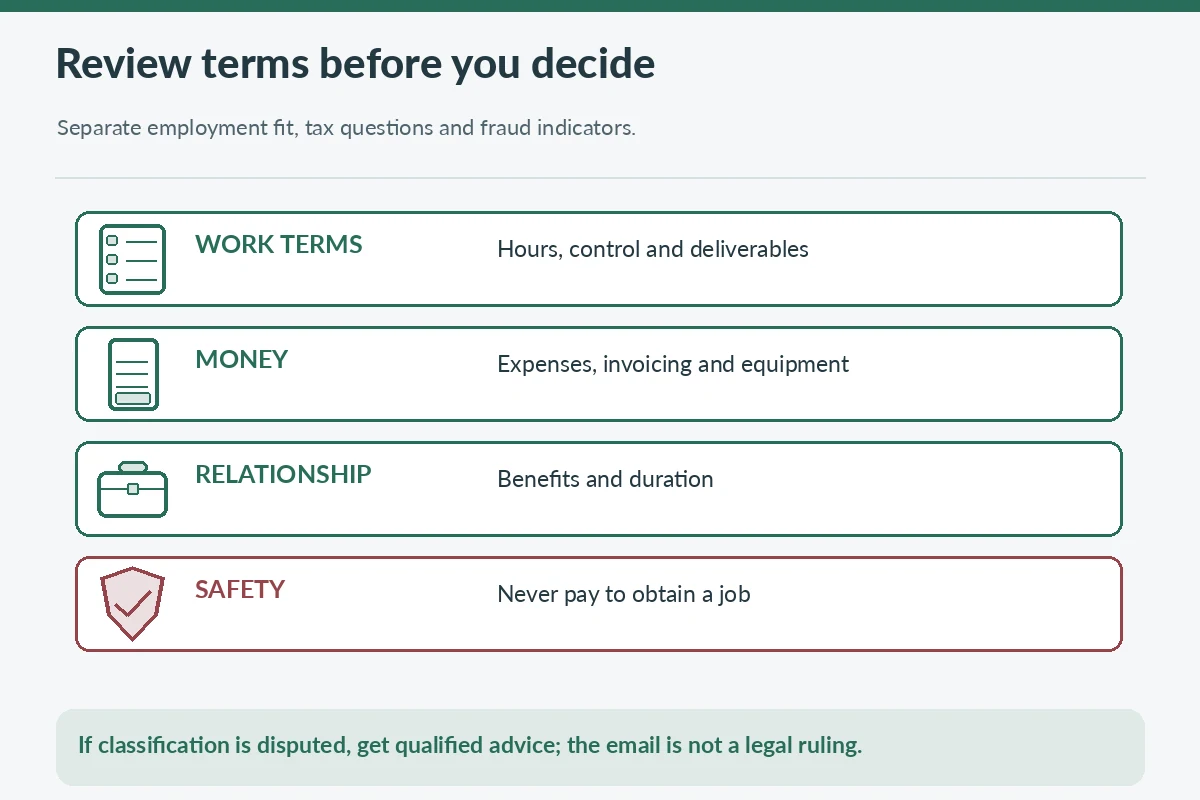
A contract may describe independent services, but the work arrangement matters more than a label. Read who sets hours and methods, who provides tools, how compensation is calculated, which expenses you bear and whether the company expects exclusivity. The IRS groups evidence about worker relationships into behavioral control, financial control and the type of relationship between parties. No single checkbox automatically determines classification. Your first task as a prospective worker is to understand the proposed practical terms and decide whether they fit your goals.
For example, a role advertised as ‘remote independent contractor’ may involve delivering a defined project on your chosen schedule or following a detailed daily shift under a manager. These are materially different arrangements. Do not assume that receiving a 1099 form resolves the question or that all contractor roles are improper. If the details are unclear, ask for them in writing before signing anything. Keep legal classification questions separate from your personal preference for employee benefits and predictability.
Compare behavioral control, financial control and relationship
Behavioral control concerns instructions, supervision and training about how work is performed. Financial control considers business expenses, payment methods, investment in equipment and opportunities for profit or loss. The relationship category looks at contracts, benefits, permanence and whether the services are central to the business. These categories are described in IRS guidance, which warns against treating any single factor as decisive. A candidate should not declare ‘this is definitely illegal misclassification’ solely from an online job posting or email summary.
Use a three-column note to list what the offer actually says, what remains unclear and whom you will ask. A request such as ‘Who purchases the required equipment, and is that cost reimbursed?’ helps determine whether the arrangement is financially workable. Another useful question is ‘Does the company specify working hours or deliverables?’ If a mismatch persists, you can decline based on terms instead of making a tax-law argument. For an actual classification dispute or material tax exposure, consult qualified professional advice and current IRS guidance.
Review payment, business expenses and protections
Clarify the rate, payment schedule, invoicing process, expense responsibility, expected volume of work, cancellation terms and any insurance or equipment requirements. Compare the proposal with the costs you would actually incur. A headline rate cannot be evaluated in isolation from unpaid administrative time and business expenses. Do not invent a universal percentage to convert a contractor rate into employee pay; individual tax and business circumstances vary. The IRS directs readers to assess the broader relationship, including financial control and available benefits.
If you prefer a regular employee position, say so before spending significant time negotiating contractor details. A candidate might write: ‘Thank you. I am focusing on employee roles with a defined payroll and benefits arrangement; is an employee position available for this scope?’ Only ask if the answer would change your decision. If the company cannot offer that structure, the conversation can close respectfully. Avoid sharing sensitive tax records or banking details merely to obtain an explanation of proposed terms.

Send a contractor-specific decline email
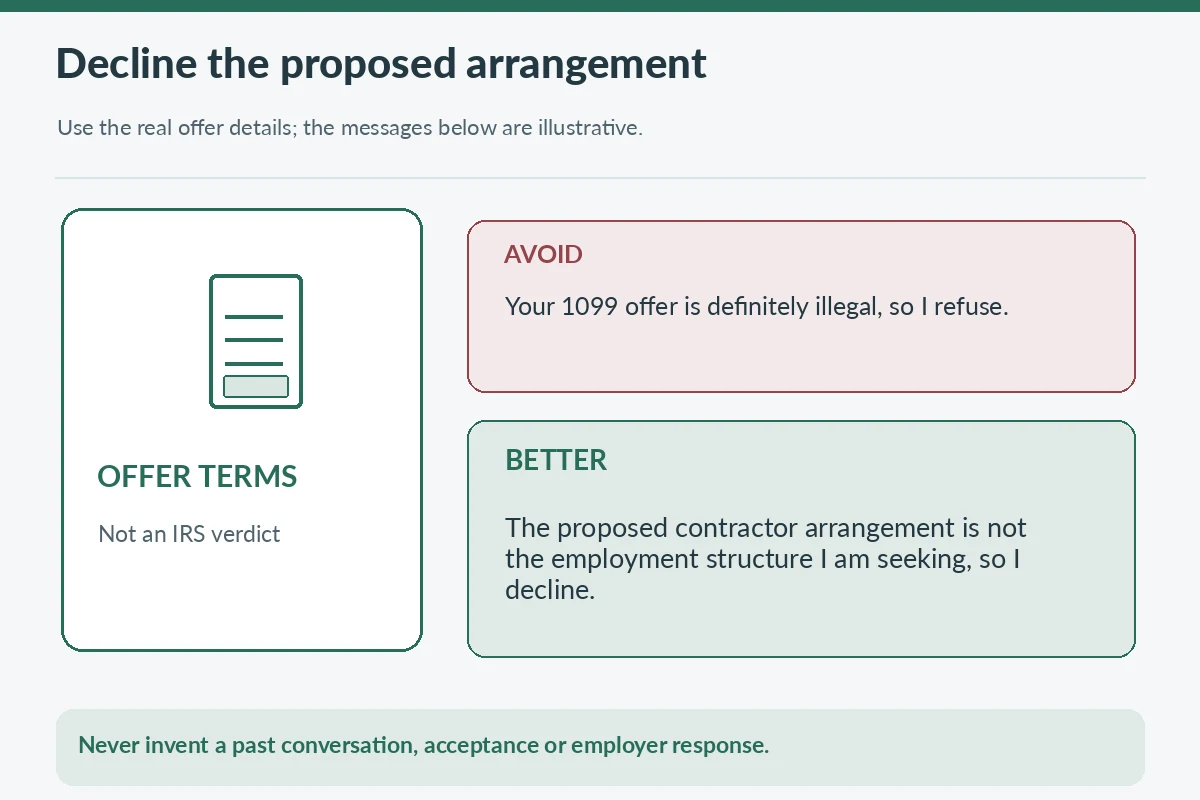
Illustrative email — Subject: [Project or Position] Offer — Decision. Dear [Contact], Thank you for offering me the opportunity to work on [project or role]. After reviewing the proposed independent-contractor arrangement, I have decided not to move forward because the engagement structure is not the right fit for the kind of employment I am seeking. I appreciate your consideration and wish you success with the project. Best regards, [Name]. The language is intentionally about the candidate’s decision, not an unverified claim about legal worker status.
A professional refusal should not threaten an IRS complaint as a bargaining tactic or imply that the recruiter committed a crime because a contract used the word ‘contractor.’ If you have a separate genuine concern about unlawful practices, seek official advice and use appropriate reporting channels independently. The decline message itself only needs to identify the proposal and communicate that you will not accept. Do not send a tax return, Social Security number or unrequested identity document in the refusal.
Spot suspicious payment requests and protect data
An offer involving an advance equipment fee, a check you must deposit and forward, or a request to send money to unlock tasks is a major warning sign. The FTC warns that honest employers do not ask applicants to pay for the promise of a job and describes fake-check schemes. Do not keep negotiating financial terms with an unverified contact while sending money or sensitive records. Check the company’s official contact information independently. This is separate from the legitimate question of whether a real company offers an employee or contractor arrangement.
If an unexpected message claims to be from a recruiter, verify it using the organization’s independently found website rather than replying to the message. Do not open a strange attachment to ‘confirm your refusal.’ Where fraud is suspected, avoid sharing additional personal details and consider FTC reporting guidance. You do not owe a potentially fraudulent account an elaborate decline essay. The main point of the article remains the distinction between an unacceptable legitimate contractor offer and a suspicious proposal requiring safety steps.
Do not use an email template as a legal status ruling
Worker status can affect taxes, benefits and rights, but state law and different federal laws may apply different tests to particular issues. The IRS describes the federal employment-tax factors and an official determination route, such as Form SS-8, when appropriate. This guide does not classify a specific worker. Do not publish the prospective employer’s private contract or make sweeping accusations about ‘all 1099 roles.’ If the stakes are substantial, consult a tax adviser, employment attorney or relevant agency with the full facts.
If you are declining before signing, confirm whether you have already agreed to any paid project work or other terms. If you have, review those commitments before withdrawing; the ordinary pre-acceptance refusal template may be insufficient. For a clear unsigned offer, a concise decision is usually all the hiring contact needs. Retain a copy of your own correspondence and any agreement you reviewed, stored securely rather than in public posts.
Apply a practical three-way final decision
Your options are to accept the documented arrangement if it fits and you understand it, request targeted clarification if a material term is missing, or decline if the confirmed terms do not work. That is a business-fit decision, not a classification test. Mark the unanswered questions that matter most: who controls delivery, who pays expenses, how invoicing works and what happens if the project is canceled. Stop gathering information when no plausible answer would make you accept the role.
Before sending, check the contact and project name, avoid legal conclusions beyond your knowledge and keep the reason brief. If you want future employee-only opportunities, you can say so without demanding a promise. A respectful refusal protects your time while leaving the other party clear that you have declined the proposed engagement. Follow IRS and FTC primary sources when you need tax classification or scam prevention information beyond ordinary offer etiquette.
| Question | What to verify | Decision boundary |
|---|---|---|
| Behavioral control | Who directs methods and schedule? | Not decided by a title alone |
| Financial control | Who pays tools and expenses? | Check full terms, not headline rate |
| Relationship | Benefits, duration and contract terms | Professional review may be needed |
How We Research Offer-Decline Guidance
We reviewed current official and university career guidance, distinguished general offer etiquette from role-specific employment and tax questions, and checked this topic against the supplied WordPress inventory and previous JobAsk batches on 2026-11-05. Sample emails, dates and candidates are illustrative, not actual employer statements. This article is educational, not legal or tax advice. Follow the exact written offer and any applicable agreements. For potential commercial relationships, see our affiliate disclosure.
Sources reviewed on 2026-11-05: Internal Revenue Service — IRS describes behavioral, financial and relationship factors for employee-versus-independent-contractor analysis.; Internal Revenue Service — IRS Topic 762 provides federal employment-tax context and discusses Form SS-8.; Federal Trade Commission — FTC warns applicants against paying to get jobs and fake-check recruitment schemes.; University of Connecticut Career Center — UConn recommends a brief, clear declining email.. These references support general evaluation principles, not a conclusion about your specific contract or workplace.
Related Workplace Guides
No. The IRS looks at the actual work relationship and several categories of facts; the label alone does not determine the status.
No. You may state that the independent-contractor structure does not fit the work arrangement you are seeking.
Yes, if you would accept such an offer. Ask whether an employee role is available; do not assume the employer can change the position.
Not reliably from a few facts. IRS guidance considers behavioral control, financial control and the relationship as a whole.
Do not send money. Verify the opportunity independently and consult FTC guidance about job-offer scams and fake checks.