
Declining a nonprofit program coordinator job offer can be done with respect for the organization’s mission and without overstating your ability to deliver its program. Check the actual position scope, reporting requirements and sensitive information handling, then let the designated hiring contact know promptly when you will not accept. You can thank the team for sharing the program’s goals without promising future volunteer work or disclosing private concerns. If the unclear issue is whether you are coordinating services, supervising staff or preparing grant reports, request clarification before treating the role as unsuitable.
A nonprofit program coordinator may arrange appointments, contact community partners, update program schedules, collect service information and support reports, depending on the organization. The Bureau of Labor Statistics describes a broader management occupation that coordinates programs, outreach and performance reporting, but a coordinator job is not automatically a manager position with final approval authority. The actual job description matters. Especially in organizations assisting clients, it is important to distinguish permitted case or contact information from data that must remain in approved systems. A candidate can assess fit without asking to see private client files.
Program Work Has Different Owners
Use a three-column mission-to-task chart: “Program delivery,” “Reporting and approvals,” and “Information access.” Under each, write the work described by the employer and the person who approves decisions. For example, inviting participants to an event may be assigned outreach work; approving grant expenditure or publishing client impact stories may require leadership authorization; service records may have restricted access. Add expected evening events, partner meetings and field visits to the schedule column. The chart turns enthusiasm for a mission into an informed employment decision rather than an emotional obligation to accept.

Four Steps to Evaluate and Decline This Offer
Step 1: Separate the mission from the concrete assignment
Read the organization’s stated mission, then check the duties of this specific paid role. Identify the program population, office or field location, hours, reporting line and whether there are events outside the ordinary workweek. Ask how volunteer coordination, partner communication and administrative records are divided. A compelling mission cannot substitute for knowing what you are agreeing to do. If you conclude the daily responsibilities are not aligned with your abilities or availability, you may decline while still respecting the organization.
Important boundary: Do not suggest that refusing employment means withdrawing moral support from the organization or the community it serves.
Step 2: Clarify who can approve outreach and reports
Ask whether a coordinator drafts messages for review, publishes approved materials, prepares reports for a manager or is expected to sign off on final figures. Outreach content, partner agreements and grant reporting can affect other teams. Confirm approval routes, review processes and the training that will be provided. Do not describe yourself as the program director if the offer names a support-level role. If the employer can explain the supervision structure, reconsider the clarified duties on their merits; if they remain unsuitable, communicate a final decline.
Important boundary: Never promise donors, funders or clients an outcome on behalf of an organization you have not joined.
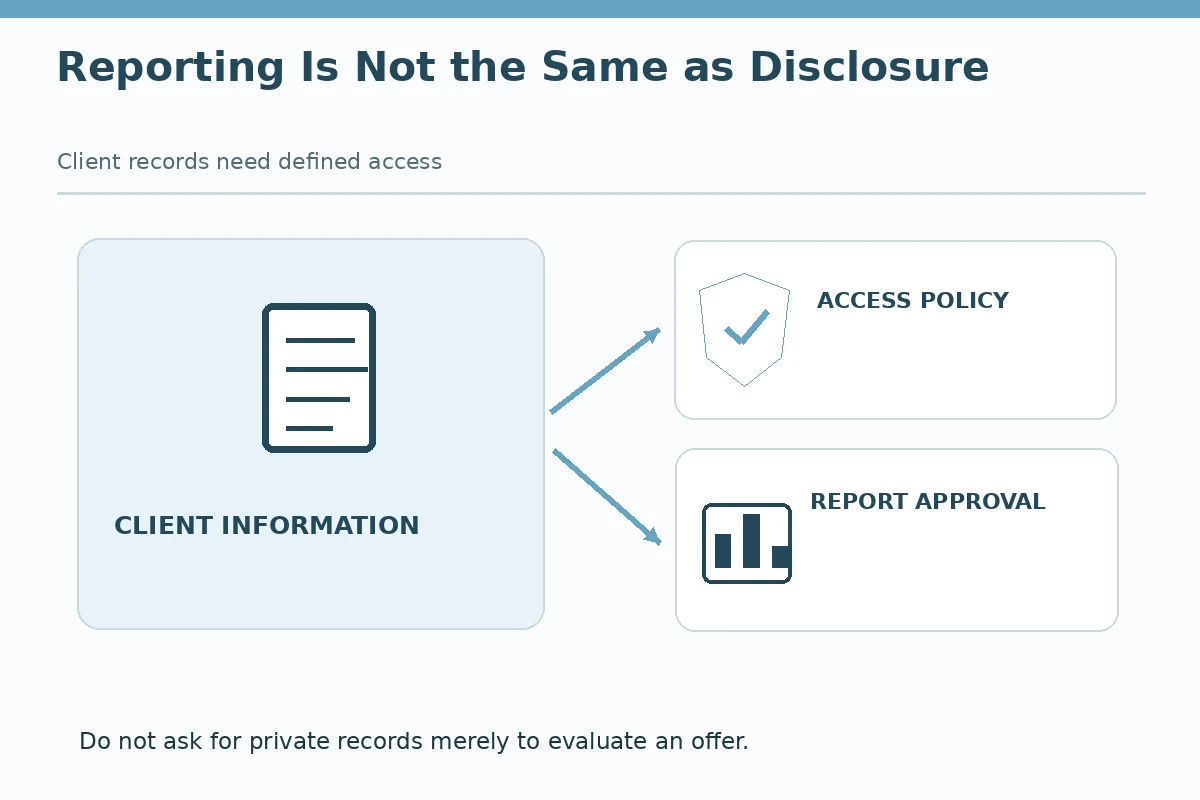
Step 3: Review client privacy and operational boundaries
Determine whether the program handles client intake, confidential service data, minors’ information or access to restricted systems. Ask only for policies and training expectations, not sample personal records. If a job posting says “manage database,” clarify whether this means approved data entry or unrestricted viewing and release. The role may be perfectly appropriate with defined access; your decision should rely on the real process rather than a speculative risk. If you are not comfortable with the assignment, you need not publicize sensitive organizational details to justify a refusal.
Important boundary: Do not attach participant lists, donor details, internal budgets or private communications to a job-offer decline.
Step 4: Send a final no to the person running the process
Address the decision to the official recruiter or hiring manager listed in the offer. Identify the position, explicitly decline, thank the interviewers and avoid comparing the nonprofit unfavorably to another employer. If a program director interviewed you separately, a brief thank-you may be considerate but should not replace the official response. You can say that the scope of the role is not the right fit at this time, but the reason is optional. Keep a record and stop further onboarding steps that no longer apply.
Important boundary: Do not imply that the organization may continue using you as an unpaid worker simply because you appreciate its mission.
Decision Matrix: Clarify, Compare, or Decline
| Offer detail | Candidate action | Evidence to check |
|---|---|---|
| Program duties are broad | Ask which tasks are assigned and approved | Written role scope |
| Data or reporting access is unclear | Request policy and supervisor details | Formal access rules |
| The role is not a fit | Decline the official offer promptly | Correct HR or manager contact |
A Respectful Decline Email You Can Adapt
Illustrative email: “Subject: Program Coordinator Offer — Decision. Hello Sam, thank you for the opportunity to join the Community Programs team and for explaining the organization’s work. After considering the responsibilities and reporting structure, I have decided to decline the Program Coordinator offer. I appreciated learning about your community partnerships and the time the team spent with me. I wish the program continued success. Warm regards, Quinn.” All organizations and people here are fictional; replace details only with confirmed facts. Do not imply an open-ended future commitment.

What to Do When the Offer Changes
A nonprofit may have a small team where coordinators support many functions, but this does not mean every coordinator independently controls grants, client records or volunteer assignments. The hiring conversation should make priorities and supervision understandable. If the offer resembles two jobs folded into one, ask which tasks are central and how they are supported. A clarified arrangement may be workable; if not, declining is a valid employment decision. Resist writing a long explanation listing everything the organization should change. The recruiter needs your decision, not an unsolicited organizational assessment.
Avoid These Communication Mistakes
Some people find it especially hard to turn down a mission-driven employer after friendly interviews. You can acknowledge the organization’s work without claiming that the job must be accepted for altruistic reasons. A respectful decline is not a judgment about the people served. If you later want to volunteer or apply for a different position, do that as a separate decision with genuine availability and the appropriate application process. Do not promise to volunteer in a decline email just to soften the news. That promise could create avoidable expectations.
Final Checklist Before Sending
Confirm the exact program name, role, deadline and official decision route. Make sure the message clearly declines and that references to the nonprofit mission are respectful but restrained. Do not expose client details, internal grant information or unsupported conclusions about compliance. If an offer was already accepted, follow the applicable commitment process rather than treating this as an ordinary refusal. Preserve your written decision and close any outstanding HR requests through the appropriate channel.
How We Research Job Offer Decisions
We checked the occupational and university career guidance on 2026-11-14. case.edu explains case Western Reserve University recommends notifying the employer of a decline promptly and says a reason is optional. www.bls.gov explains the Bureau of Labor Statistics describes community program coordination, outreach, reporting and oversight as distinct duties. careerdevelopment.princeton.edu explains princeton recommends clarifying decision deadlines and being transparent when comparing outstanding job offers. ischool.uw.edu explains the University of Washington Information School urges prompt, considerate offer decisions and written follow-up after verbal notice. These are general professional communication frameworks, not legal advice or a determination of any actual employment contract. Examples of candidates, employers and offers are fictional. Consult your offer documents and the relevant institution if you have already accepted. See the affiliate disclosure.
Related Workplace Guides
No. Employment fit and commitment matter, and prompt communication gives the organization time to plan. You can respect the mission while declining the role.
You may briefly say the role is not the right fit, but a detailed critique is not necessary. Ask for clarification first if the scope might be negotiable.
Do not request private client information. Ask about access policies, training, data responsibilities and supervision instead.
No. Avoid making commitments you do not intend to fulfill simply to soften your decline.
Use the official offer decision contact. A separate short thanks to a director may be appropriate but does not replace HR or portal requirements.