
Entry-level operations analyst searches need an important reality check: ‘analyst’ can describe a supervised reporting role or an experienced consultant who recommends organization-wide changes. Search for operations reporting assistant, junior operations analyst, and process support analyst, then test the actual requirements. Strong first-role evidence may be a clean spreadsheet, documented data checks, and an exception report that a supervisor can review. Do not claim you approved budgets, redesigned an entire business, or advised executives if you only practiced checking records.
Separate operations support from management consulting
Look for postings built around recurring data: updating a tracker, reviewing missing fields, producing a weekly summary, confirming a handoff, or preparing material for a manager. Those are possible junior assignments. By contrast, jobs that independently diagnose an organization, recommend major staffing changes, and own financial outcomes resemble experienced management analysis. The Bureau of Labor Statistics notes that management analysts typically bring relevant work experience; a title that sounds junior does not erase demanding duties.
Use three labels in your search notes: ‘support,’ ‘analysis under review,’ and ‘decision authority.’ A role may require a college credential, industry exposure, or specific systems. Meet the stated essentials rather than assuming the employer will consider a demonstration project as a substitute. Where the requirements are ambiguous, a short question to the recruiting team about the actual first-month tasks can be more valuable than guessing.
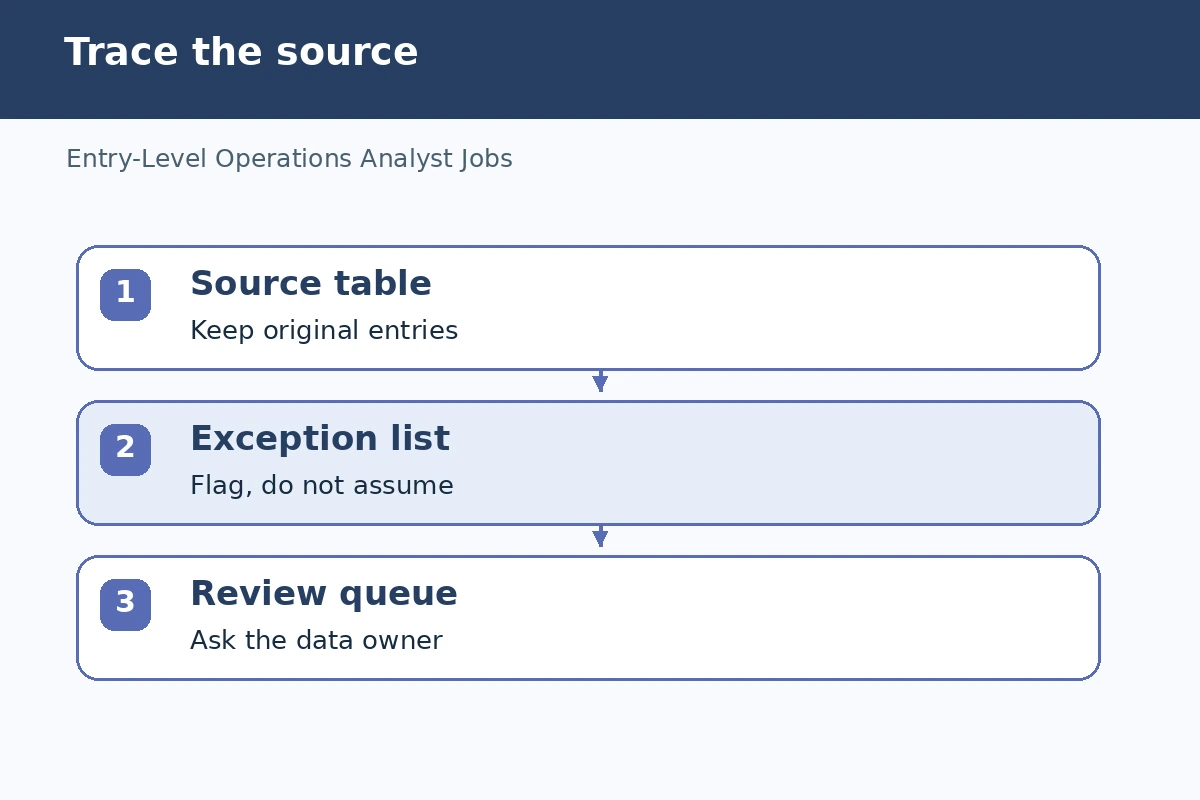
Build an exception log with fictional data
Create a tiny synthetic order or service tracker with fields for request number, received date, owner, status, and completion note. Insert fictional examples of a missing owner, a repeated identifier, and a date entered in the wrong format. Your assignment is to flag these issues and describe a verification step, not to pretend a real company suffered the errors. Label the dataset ‘synthetic training example’ in both the file and your portfolio description.
Make a separate exceptions tab with columns for ‘Observed issue,’ ‘Evidence,’ ‘Question to confirm,’ and ‘Review status.’ A missing value is not automatically a failed process; the real record might be in another authorized system. Write ‘Needs confirmation’ until a knowledgeable person has checked it. This disciplined distinction between an observation and a conclusion demonstrates that you can assist a team without inventing operational findings.
Show where a recommendation needs review
Suppose several fictional records contain mismatched status labels. You can suggest that the team review its status definitions and consider a shared glossary. You cannot claim that the change will save hours or eliminate errors without valid evidence. Show the proposed glossary as a draft for supervisor review and document which assumptions you used. A draft improvement proposal is not an approved policy or implemented change.
This is also a useful answer to the interview question, ‘What would you do if the numbers looked wrong?’ Say you would check the source, record the discrepancy, and ask the person responsible before circulating a corrected report. Editing the raw source silently can erase the trail needed for troubleshooting. The appropriate correction path depends on the employer’s actual systems and authorization procedures.
Choose search terms that describe junior tasks
Try combinations such as operations coordinator, reporting assistant, business operations associate, process documentation assistant, or operations analyst trainee. They are discovery terms, not guarantees that a vacancy is entry-level. Read each description for spreadsheet work, reporting, meeting notes, and communications between teams. Do not confuse an entry-level company title with an occupation-wide education requirement.
Keep the sector visible in your search. A hospital, warehouse, software company, and local service business may all say operations but handle radically different data. Do not imply you know a clinical system, regulated financial process, or industrial safety procedure from a school spreadsheet. If a listing expects specialized knowledge, note that requirement before deciding whether to apply or seek adjacent work.

Turn the project into proof without fake results
In a résumé projects section, you could state: ‘Created a fictional service-request log; added validation checks for missing owners, duplicate IDs, and inconsistent status labels; documented questions for a reviewer.’ This is credible because it names the simulated material and the work performed. Avoid ‘reduced company errors by 40%’ or ‘implemented organization-wide dashboards’ unless that truly happened and you can substantiate it.
Bring a short readme with your sample. Include the purpose, data source disclosure, how to reproduce your checks, known limitations, and what a manager would need to verify. A reviewer should see how you think and what you do not know. A glossy chart without source notes may look sophisticated while conveying little about the accuracy of the underlying work.
Decide what to ask about the team
Ask which person verifies source records, who approves changes to a reporting definition, and what a new hire would produce in the first month. These questions demonstrate respect for data governance rather than a reluctance to act. A clear employer can describe the workflow and escalation path. If nobody can explain who signs off on important changes, investigate the role’s expectations more carefully.
Other useful signals include named collaborators, training in the employer’s tools, and written definitions for routine measures. A job requiring you to both set performance policy and validate your own assumptions without review is different from a structured first analyst assignment. Compare roles against your available proof and growth priorities, not simply a title or an impressive list of software brands.
Apply with one narrow example
A fictional application line is: ‘I built a reproducible example of order-status validation using synthetic records and documented each discrepancy before suggesting changes. I am comfortable preparing clear exception summaries for a supervisor to review.’ This claim is supported by a specific file and does not imply a real client engagement. Follow it with one sentence linking the task to the vacancy’s reporting or coordination duties.
If you have relevant employment, use real duties within permissions instead. A cashier who reconciled end-of-shift records or a student leader who tracked project deadlines may have transferable process habits, but the job titles and responsibilities must remain accurate. Avoid using someone else’s spreadsheet or proprietary reporting data to prove that experience. A self-made example is safer when confidentiality is uncertain.
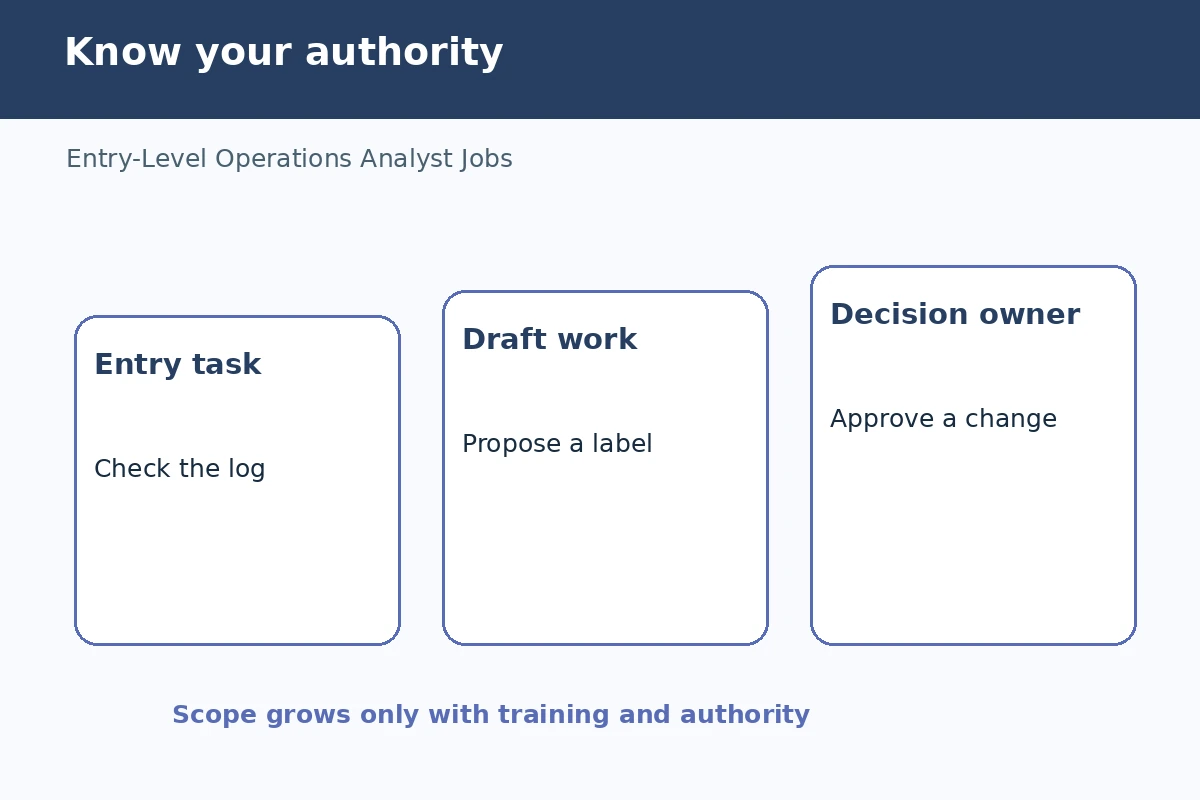
Keep the application decision evidence based
Save the job’s essential requirements and classify each as demonstrated, trainable, or currently missing. Attach a sample only where it directly supports a stated task. Confirm whether the posting expects prior consulting, advanced statistics, database credentials, or independent budget ownership. Some jobs may be out of scope today; that is information you can use to target preparatory roles.
Before submitting, check that the employer is genuine, that the link leads to the organization’s own application system, and that you have not exposed real operational data. Keep your application materials consistent and revisit the search after you have stronger evidence. The goal is a sustainable first role where good checking, transparent assumptions, and respectful review are valued.
How We Research Entry-Level Roles
We compared task descriptions and preparation expectations in U.S. Bureau of Labor Statistics; O*NET OnLine; BLS occupational research. The sources describe broad occupational activities, not a promise that a specific employer will hire a beginner. We distinguished supervised support tasks from experienced decision-making and avoided claims about vacancies, compensation, placement rates or employer outcomes. All example names, records, products, and exercises in this guide are illustrative. Check the current employer posting and keep your application truthful. This guide is not legal, financial, or safety certification advice. See our affiliate disclosure for information about recommendations and relationships.
Related Job Search Guides
No. Some analyst titles describe advanced consulting work. Read the specific duties and experience requirements.
Create synthetic records or use data clearly authorized for reuse; label the origin and limitations.
Only if the claim refers to a real, defensible measurement. A synthetic exercise is evidence of process, not business impact.
Follow the organization’s permissions and review workflow; record discrepancies before altering authoritative data.
An exception log, verified summary, or clearly documented draft report prepared for a reviewer.