
When a former coworker asks you to serve as a professional reference, agree only if you know enough about their work to provide an accurate, useful account. Explain that you were a peer, describe the assignments you saw them handle, and avoid opinions about personnel files, confidential clients, or outcomes you cannot verify. If a recruiter contacts you, confirm the request is legitimate and check any employer policy before discussing the person. This article includes an original hypothetical reply template; it is not a real recommendation and should not be copied as a false personal endorsement.
Decide whether you know enough to say yes
Start by asking what kind of reference the person needs. A request to confirm that you shared a project differs from a request for a formal management appraisal. Think through how long you worked together, which tasks you witnessed, and whether you can recall specific responsible actions. If you cannot, you can decline courteously or offer only a limited factual account. A reference should be useful because it is grounded in observation, not because you feel socially obligated to praise someone.
You may also need to check company rules about responding to employment inquiries. Some workplaces direct formal verification requests to HR. Never assume that knowing a colleague gives you access to or permission to release private personnel information. If a request requires official authorization that you lack, say so and redirect the inquirer to the correct office when appropriate.
Confirm the intended audience and verify the request
Ask your former coworker for the job title, organization, expected timeframe, and which contact method they have permission to share. When an unfamiliar person calls, verify the employer and return the call through a published company channel if something seems suspicious. You can ask the reference checker to explain the role so your examples remain job-relevant. Don’t open unverified attachments or provide sensitive identity details simply because someone says they are a recruiter.
A short written agreement about the scope protects both parties. For instance, you might say, ‘I can discuss our shared inventory-reconciliation project and communication within the team, but I was not your supervisor and cannot verify HR records.’ That is a more reliable promise than ‘I’ll say whatever helps.’ The coworker can then decide whether your perspective fits the employer’s request.
Identify observable work before selecting adjectives
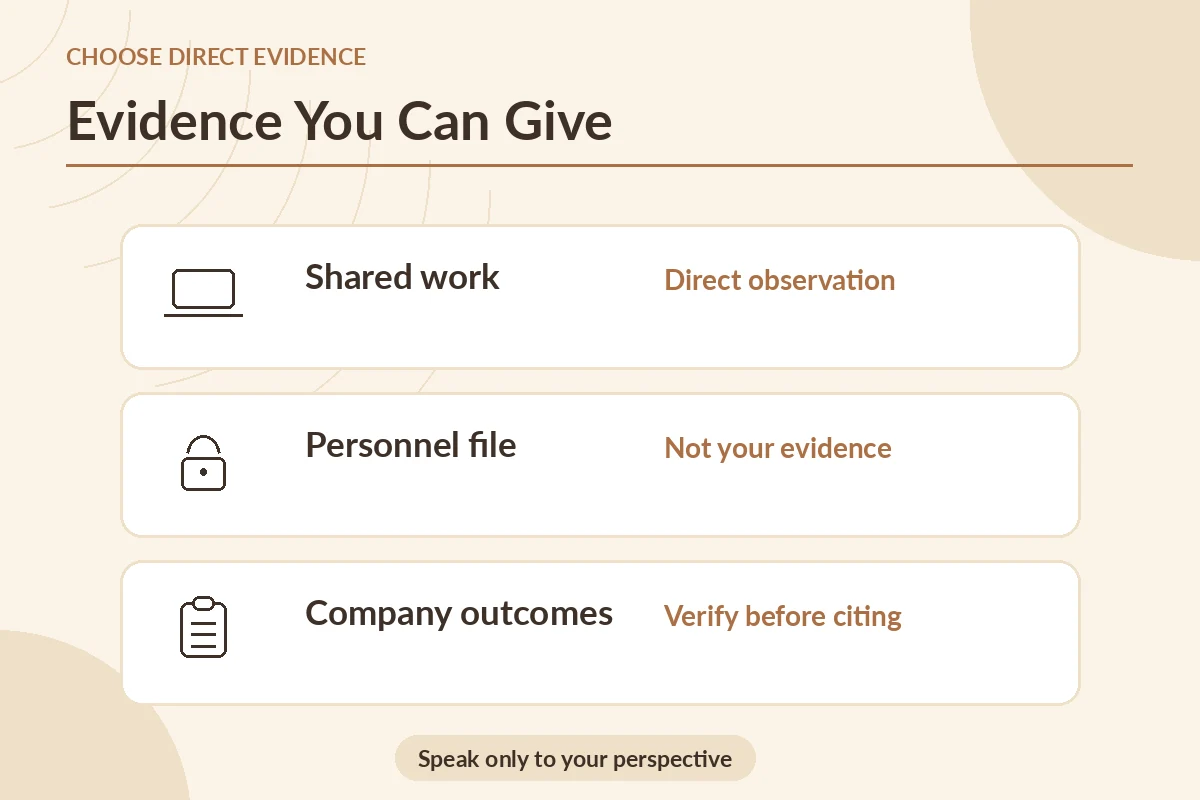
Use an evidence outline: how you knew the person, the timeframe, what you worked on together, two actions you directly saw, and a measured description of how those actions affected the team. If you saw the person catch a missing shipment field and raise it with the appropriate lead, report that observation. Do not transform it into a claim that they eliminated all errors or saved a certain amount of money without direct, verifiable evidence.
Avoid blanket assertions such as ‘never missed a deadline,’ ‘the most ethical employee,’ or ‘always exceeded targets’ unless you genuinely have a basis for the exact claim. Focus on ordinary, useful work behaviors: checking details, communicating delays, following safety procedures, accepting feedback, or asking for clarification. Resist making up numbers for a sharper-sounding story.
Make the relationship and observation period explicit
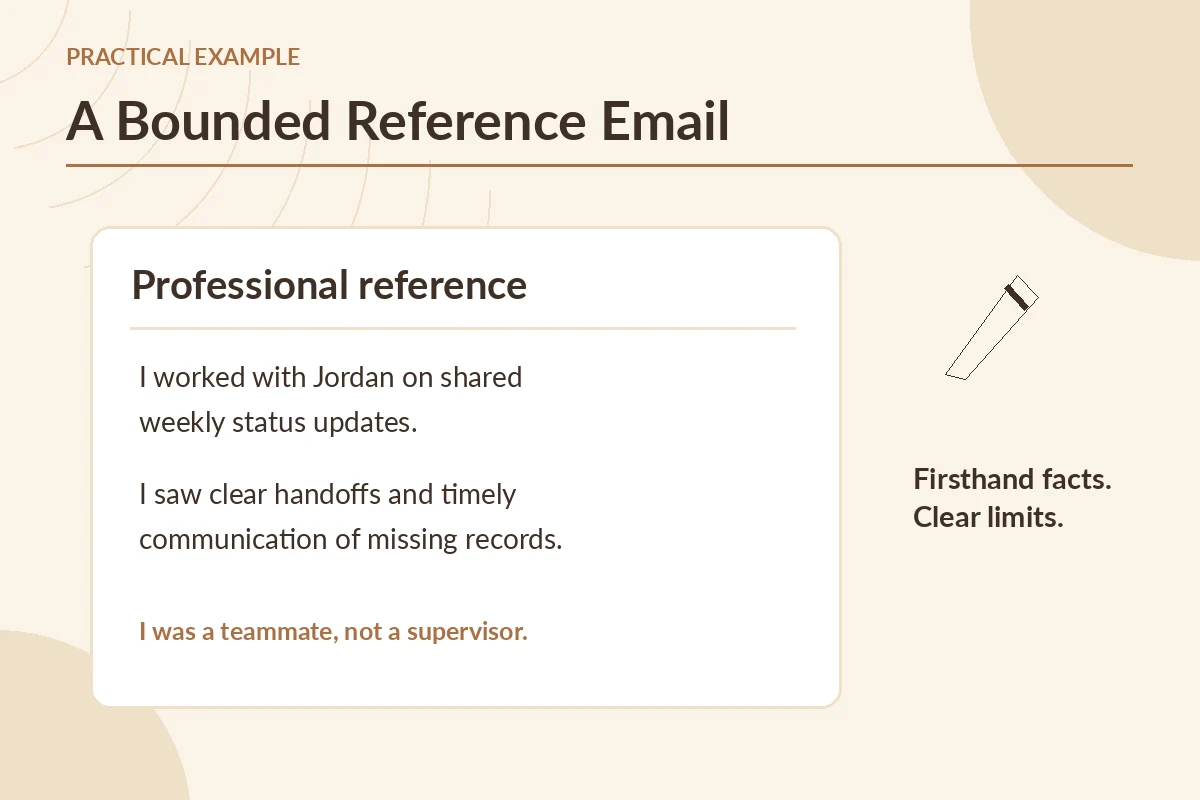
A hiring team should know whether your view comes from working as a peer, supervising tasks, or being a client. An example first sentence is: ‘I worked alongside Jordan Kim as a project coordinator on the same operations team from 2022 to 2023.’ This is fictional and illustrates structure only. If you are now at another company, identify the past workplace where the collaboration took place without implying you currently speak for that organization.
Avoid signing a letter ‘Manager’ when you never managed the candidate. A correct peer perspective can carry useful weight. You may add that you did not have access to formal review ratings and cannot assess matters outside the shared assignment. This does not weaken what you observed; it makes the boundary clear.
Use a short sample reply with factual language
A hypothetical written reference might read: ‘I worked with Jordan on weekly status updates for a logistics team. Jordan maintained the shared task register, flagged incomplete entries before our handoff, and communicated blockers promptly. I can speak to this collaboration; I was a teammate rather than Jordan’s direct supervisor.’ Replace every name, event, and task with facts you personally know. This is not a reusable testimonial for someone whose work you have not seen.
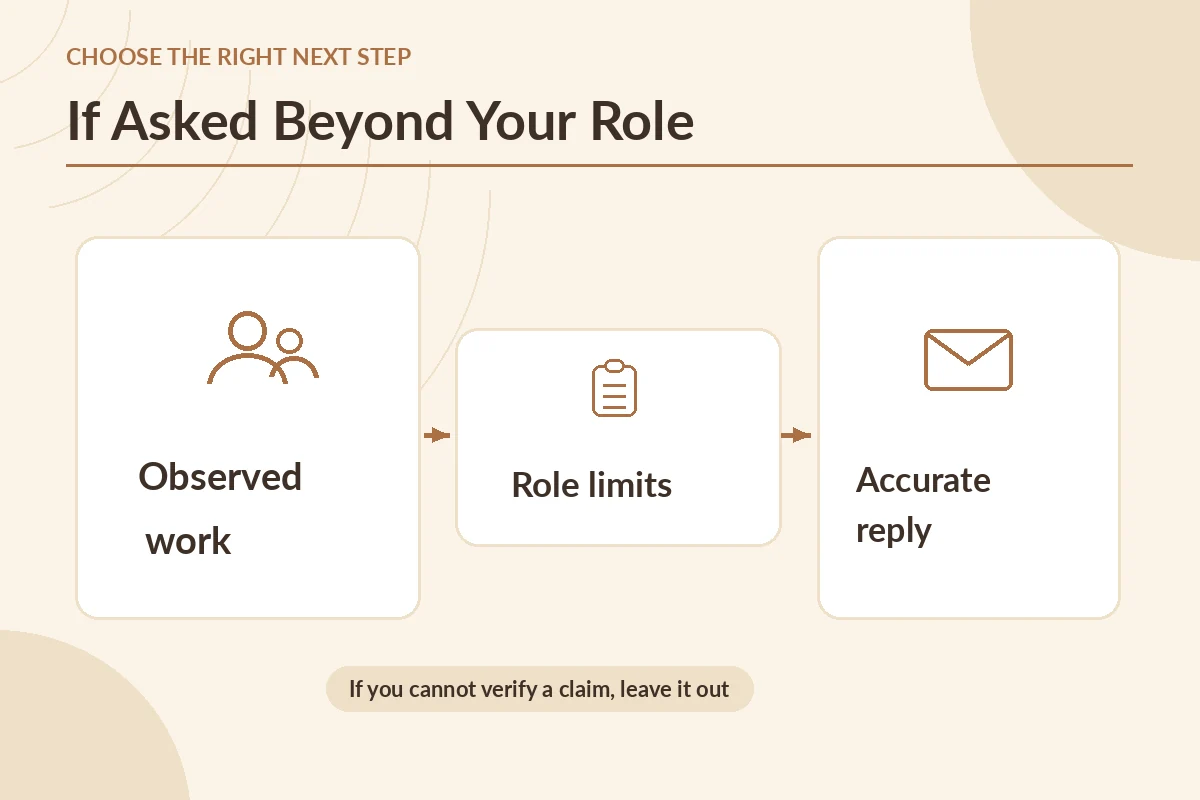
If a recruiter asks ‘Would you rehire them?’ but you never had hiring authority, you can answer: ‘I did not make hiring decisions. I can describe how we worked together.’ If asked to disclose why the person left, say only what you know firsthand and are authorized to share. Avoid speculation about disciplinary matters, private health, compensation, or internal disputes.
Respond carefully to requests for ratings and outcomes
Reference-check forms may use numerical scales or ask you to rank strengths. You can answer only within your basis of knowledge; clarify when a rating refers to one shared project rather than the person’s complete employment. If the form requires private manager-only evaluations, explain your limited role or decline that part. Providing a neutral, limited answer is better than supplying an impressive but invented score.
Be cautious with metrics. You may say a colleague checked records before a deadline if you saw them do it. Do not repeat an unverified percentage improvement. When factual details are uncertain, verify your own notes if permitted, or omit the claim. A reference should not become a vehicle for forwarding protected company documents.
Set boundaries on confidentiality and professionalism
Discuss only legitimate job-related information about the former coworker. Do not share their personal contact history, health information, family circumstances, immigration status, or sensitive customer files. Even a recruiter who asks a broad question does not need every detail you may know. Keep your description linked to responsibilities you observed, and consult your employer’s policy if unsure whether you can respond as an individual or in an official capacity.
Record the inquirer’s name, employer, and general subject when appropriate, particularly if you receive repeated requests. You need not provide internal notes or forward messages to every person who asks. Where the reference would put you in a conflict of interest, say no. Integrity is more useful than a flattering response given under pressure.
Close the conversation and keep your future consent current
If you agree to act as a reference for one search, you can specify whether the person may list you for additional openings. They should notify you before sharing your contact details again. Your role, email, or willingness might change. If you cannot respond later, send a respectful message promptly rather than leaving a recruiter waiting on a contact you never approved.
After the call, you can tell the former coworker that a reference conversation occurred without disclosing confidential hiring information. You do not control the hiring result and should not promise a positive outcome. A useful professional reference is truthful, relevant, respectful, and limited to your actual experience.
How We Research Professional Reference Advice
We checked guidance from hr.cornell.edu; sc.edu; hls.harvard.edu; careerservices.cns.utexas.edu about selecting people who observed real work, requesting permission, describing professional relationships accurately, and limiting claims to what a reference can genuinely know. The sources describe general career practices rather than rules at every employer. Example names and events here are hypothetical and do not represent an actual reference check, legal conclusion, or hiring outcome. Follow the instructions of the specific hiring organization and use only approved contact information. For commercial relationships and links, review our affiliate disclosure.
More Resume and Cover Letter Guides
No. Agree only if you can provide genuine observations and are comfortable with the request and any workplace policies.
Yes. State your real relationship so the recruiter knows what you observed and what you could not evaluate.
Answer only within your direct knowledge; identify the limited perspective or decline questions you cannot support.
No. Use appropriate work-related examples without disclosing confidential company, client, or employee records.
No. You can provide truthful, relevant observations, but you cannot control an employer’s selection process.