
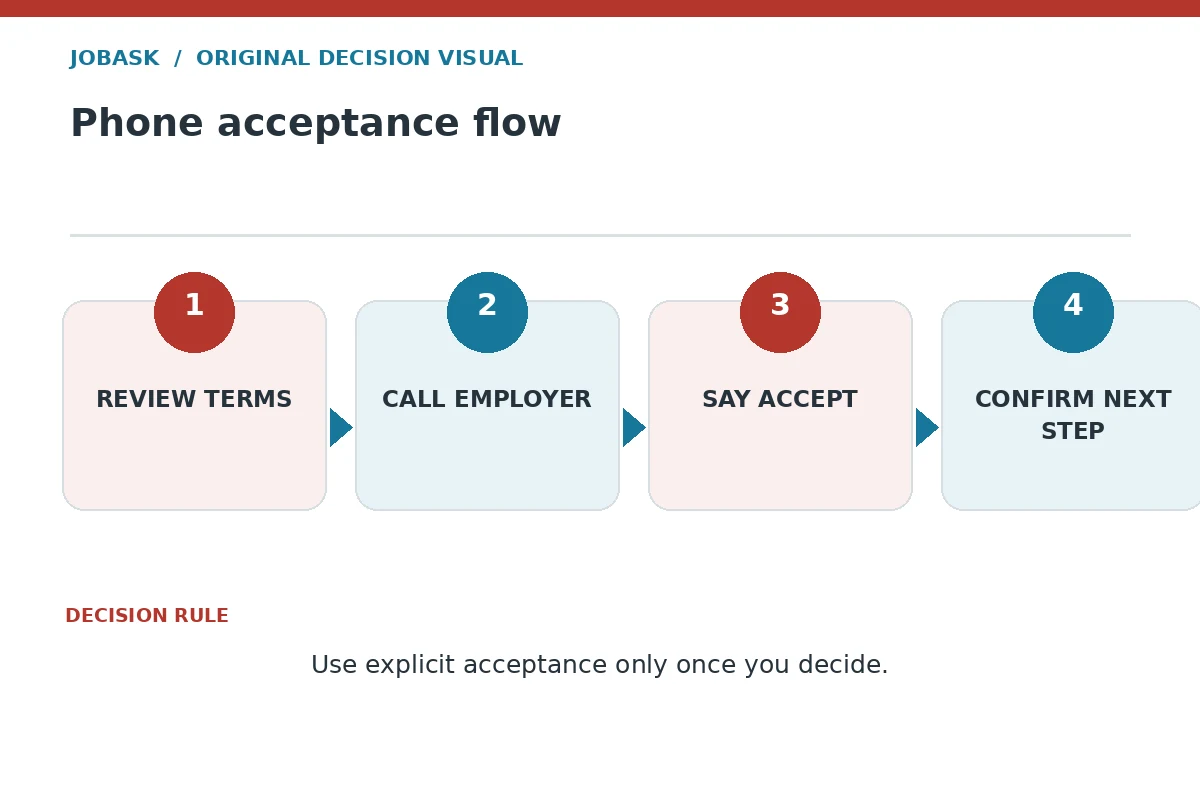
Quick answer. Accept by phone only after you have decided to take the role and understood the material terms. Thank the caller, state clearly that you accept the named position, repeat the agreed essentials, and ask how to complete written acceptance or onboarding. Follow the employer’s instructions for documenting your decision.
Decide Whether the Call Is for Discussion or Acceptance
A job-offer call is not always an invitation to decide on the spot. Some calls announce an offer, while others occur after you have reviewed a written letter and chosen to accept. Before dialing, establish which situation you are in. If you still have major questions about duties, work location, schedule or start date, use the call for clarification instead. An explicit acceptance should represent a genuine decision, not a strategy to stop the recruiter from calling other candidates. For more detail, our guide “After Accepting a Job Offer” looks at a practical checklist before day one.
Prepare a private space, the written offer, a pen and the recruiter’s contact details. Make a short agenda: thank the person, identify the job, confirm that you are accepting, verify agreed logistics and ask about follow-up paperwork. There is no need for a dramatic speech. The phone format should make the decision easy for the employer to record accurately. Berkeley and Harvard both discuss the difference between receiving the offer, evaluating it and formally accepting it.
Use Clear Words When You Are Ready to Accept
An original hypothetical script: “Hello [Name], thank you for your offer of the operations coordinator position. I have reviewed the written information and I’m pleased to accept. I understand the start date is [date] and the work location is [location]. Is that still correct, and is there a written step you would like me to complete?” This script is a fictional illustration, not a report of an actual offer. Replace every bracket with the employer’s documented facts.
Avoid calling when you are unsure whether a verbal yes could have consequences. The legal significance of a verbal agreement varies by circumstances and location; this article does not provide legal advice. If you are uncertain about the terms or any paperwork, request clarification before committing. The goal is to make your intention and the employer’s next instructions clear, without treating a telephone conversation as a substitute for reviewing the underlying documents.
Repeat the Job Details That Matter for Handoff
Confirm the exact job title, start date, location or remote arrangement, supervisor or primary contact, and what document the employer expects next. Only repeat compensation details if they are necessary to resolve an actual discrepancy; do not invent figures. Ask the recruiter to correct any conflict between the call and the letter. A start date may depend on a screening or onboarding step, so use the employer’s actual wording rather than assuming a condition has already been satisfied.
A useful mini-checklist has three columns: “written,” “stated on call,” and “resolved.” Suppose the letter says “Operations Coordinator” but the recruiter says “Operations Assistant.” Ask which title will appear on the formal record. A mismatch can be clerical or substantive; it requires confirmation, not a guess. Berkeley’s offer-evaluation guidance identifies the position, start date, contact and acceptance deadline as important written details. For a step-by-step method, see accepting an offer by phone and confirming details.
Ask About the Follow-Up Channel and Documents
After the acceptance sentence, ask whether the employer uses an HR portal, e-signature, email reply or a separate document. Then ask when the expected materials will arrive. If the employer instructs you to use a secure company portal, follow that verified route instead of downloading attachments from an unknown third-party account. A telephone yes does not automatically complete all administrative steps, and process details differ by employer and role.
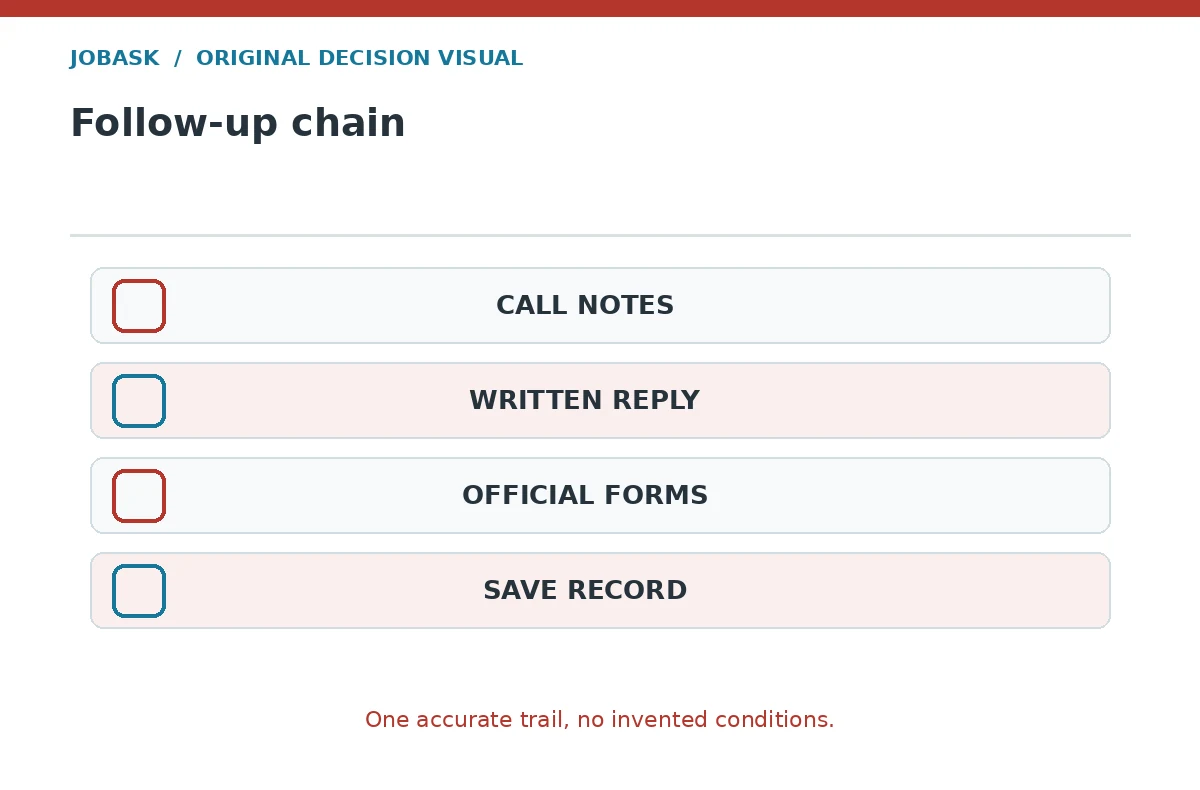
You can close with: “Thank you for explaining the next steps. I will look for the document from the address you confirmed and return it through the requested channel.” If a material written term appears to change afterward, pause and clarify that change with the recruiter instead of quietly accepting a different document. Keep copies of relevant communications where permitted, and never ask a colleague to share confidential hiring forms on your behalf.

Send One Short Written Confirmation After the Call
A hypothetical follow-up could read: “Subject: Operations Coordinator — Phone Acceptance. Hi [Name], Thank you for speaking with me today. I am happy to confirm that I accepted the Operations Coordinator offer discussed on our call, subject to the written steps you outlined. I understand the anticipated start date is [date]. Please let me know if anything else is needed from me. Best, [Name].” If the employer has a prescribed acceptance format, use it instead.
Be careful with the phrase “subject to” in a real acceptance: use it only when it accurately reflects the employer’s own stated conditions and your intent. Do not add invented exceptions or legal clauses to a routine email. If you only agreed to consider the offer rather than accept it, write “I will review and respond” instead. The written note should memorialize the conversation faithfully, not alter what was agreed or imply a new condition that the recruiter never discussed. If you are starting from scratch, read What to Say When You Receive a Job Offer Without Accepting Yet.
| Moment on the call | What to verify or say |
|---|---|
| Before the call | Written offer reviewed; essential questions answered |
| Decision sentence | I am pleased to accept the [role] position |
| Confirm details | Role, start date, work location and reporting contact |
| Next step | Which secure portal or document confirms acceptance? |
Handle Voicemail and Missed Calls Differently
Do not leave a final acceptance on voicemail if you need interactive confirmation of changed facts. A missed-call return message can simply say you are available to discuss the offer and provide an appropriate callback window. A recruiter may be in another time zone or on a shared number; avoid speaking sensitive details into a recorded message. You can ask for a scheduled call and confirm the contact through a known employer email address.
If you were asked explicitly to send a written response instead of calling, honor the employer’s process. Some organizations require an acceptance click in a portal; others prefer a signed letter. A phone call is a method of communication, not a universal requirement. Harvard describes phone acceptance as a preferred approach for its students while also recognizing employer-specific paperwork. Treat that as career guidance, not a rule binding every U.S. workplace.
Close the Loop Without Losing Your Records
Once you have accepted, record the call date, the name of the person you spoke with, and the next document expected. Read any forms against the offer you reviewed and send questions to the verified contact. Notify any other recruiters whose open processes you are withdrawing from once you are genuinely committed; do so politely and without sharing confidential details of the new role. For the fuller picture, see our guide to questions to ask before accepting a job offer and how to email them.
Avoid announcing a start date publicly until you have confirmed timing with the employer and completed any necessary current-employer transition. Keep communication lines open in case onboarding instructions change. If you suspect the offer is fraudulent, the FTC recommends independent verification and warns against paying to receive a job. An employer’s use of the phone does not prove legitimacy; the offer must still be checked through trustworthy channels.
How We Research This Job Offer Decision
We compared university advice on phone acceptance, reviewed written-offer checklists, and paired those steps with an original call-to-document matrix. All named roles and scripts are illustrative; no telephone interview or employer response was represented as real.
Sources and Editorial Transparency for This Guide
Source pages checked October 20, 2026: www.career.berkeley.edu — source 1; www.career.berkeley.edu — source 2; careerservices.fas.harvard.edu — source 3; consumer.ftc.gov — source 4. We link to these resources so readers can check the original guidance. This is general career communication guidance, not individual legal, financial or employment advice. For disclosures see the JobAsk affiliate disclosure. We have not claimed any affiliate approval for resources linked here.
Related Workplace Guides
- Accept a Job Offer by Text: Confirm the Terms in Writing
- How to Accept a Job Offer After Reviewing the Written Terms
- How to Accept a Job Offer by Email After Checking the Details
- Accept a Job Offer With Open Questions: Clarify Before Committing
- How to Accept a Job Offer in Person Without Leaving Details Unclear
Often yes, if that is an agreed communication method and you intend to commit. Follow the employer’s actual written or portal acceptance instructions.
Thank the recruiter, identify the position, say clearly that you accept, confirm agreed logistics and ask about the written follow-up.
A concise written recap is often helpful, but follow the employer’s specified process and avoid contradicting formal paperwork.
Ask for the complete written terms before committing if material details remain unclear.
Prefer an interactive conversation or the employer’s official written channel, particularly if you must verify key details.