
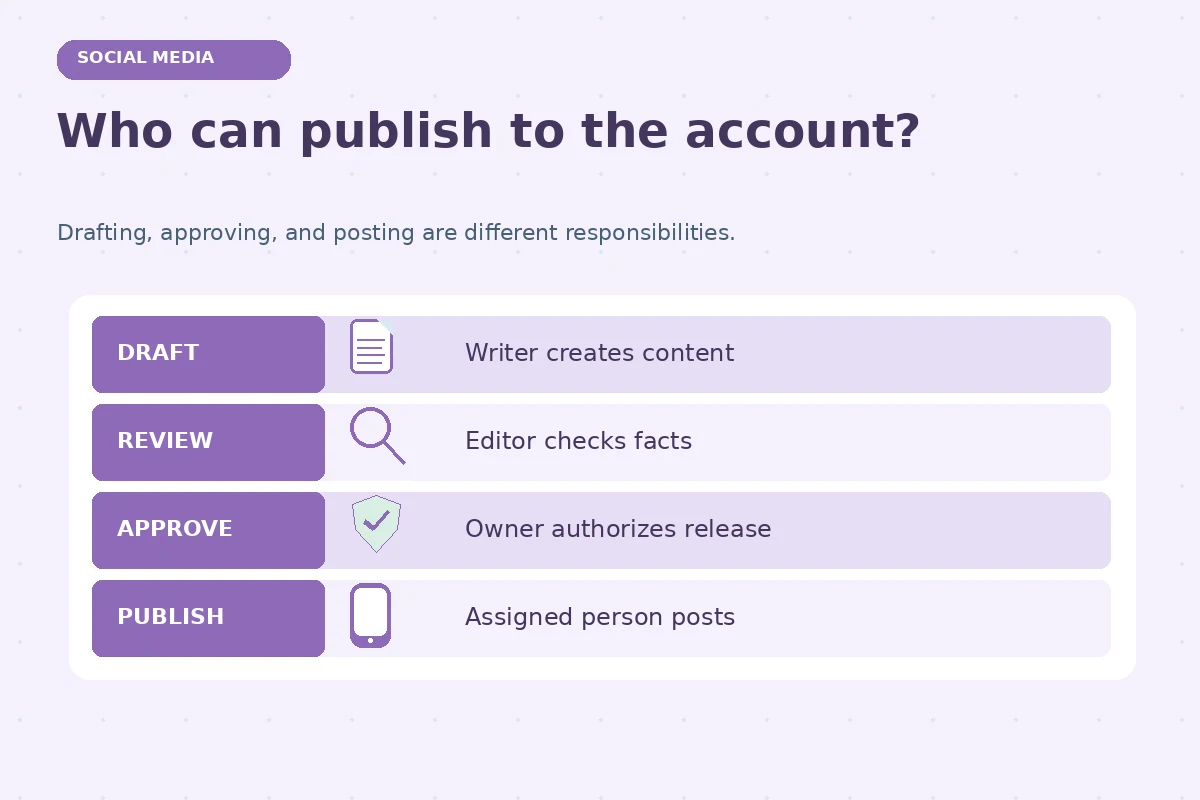
A social media assistant cover letter with no experience should describe how you create, review, and organize content—without claiming that a class assignment was a client campaign or that you were authorized to post for a brand. Start with a real volunteer newsletter, campus club draft calendar, school project, or personal portfolio. Explain the audience, what you drafted, how you checked accuracy, and who approved the material, if anyone. The example below is hypothetical; the approval map and final checks help keep your application credible.
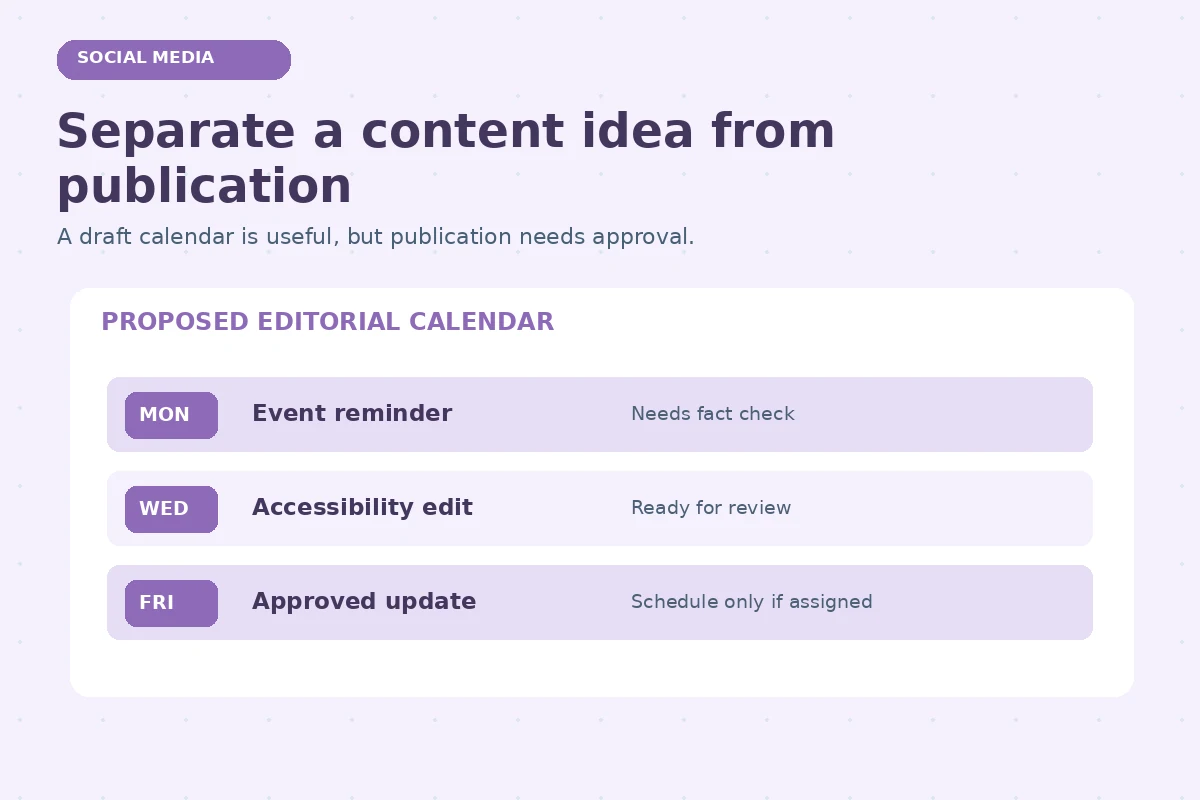
Separate a content draft from account management
Begin with the job duties. A social media assistant may help plan posts, draft captions, organize visual assets, maintain a publishing calendar, collect approved information, or prepare basic reporting. A posting might also involve responding to comments or scheduling material, but those tasks often require instructions and account permissions. The Bureau of Labor Statistics describes communications professionals developing social media programs and assessing public responses; that context helps explain why accuracy and review matter.
A beginner may have evidence in a course project or personal account. That is valid context but not the same as representing a client or having employer publishing authority. Say “drafted three sample captions for a class brief” rather than “led a brand launch.” If a club adviser approved your actual posts, say that. Do not invent follower growth, engagement percentages, ad spend, or a platform certification because those claims seem expected in a marketing letter.
Choose a portfolio example you can discuss
Select one real example that has a goal, audience, content choice, and review step. You might have made a sample calendar for a campus event, checked dates against the official schedule, edited captions for clarity, and asked an organizer to confirm the details before anything went public. Those actions are modest and job-relevant. If the calendar never went live, label it a draft. The portfolio can show good judgment even without a campaign outcome.
Explain why you chose each format: an accessible event reminder, a short update that puts the date first, or a graphic with legible text and useful alternative text. If a class assignment requested mock metrics, avoid presenting those figures as observed engagement. If you created material using someone else’s images or names, confirm you have permission to use them in a public portfolio. When in doubt, demonstrate with your own original, fictional content instead.
Use this fictional assistant cover letter
The example is hypothetical and does not describe a real project or employee. Adapt the tasks and the account owner to your own story; do not copy the claimed experience unchanged.
Dear Hiring Manager, I am applying for the Social Media Assistant role listed on your careers page. I enjoy preparing clear content that helps an audience find accurate information, and I would welcome the chance to learn your team’s editorial and approval process. My relevant experience comes from a campus organization project rather than paid brand account management.
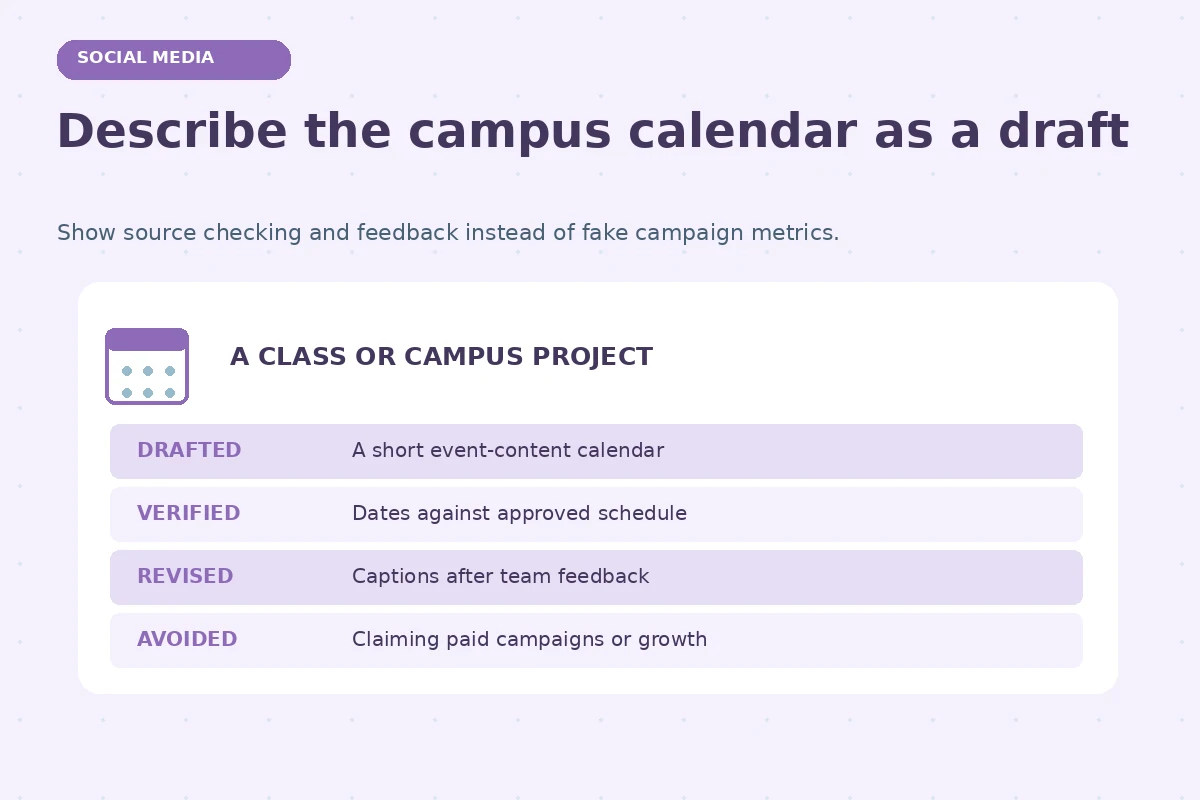
I helped draft a short event-content calendar, checked dates against the organizer’s approved schedule, and revised captions after the group leader’s feedback. We used the drafts to coordinate what information still needed confirmation before publication. That process taught me to separate writing from approval and to keep source details accessible to reviewers. I would bring that attention to detail and willingness to learn your tools and voice guidelines. Thank you for considering my application. Sincerely, [Your Name]
Show the approval trail in the middle paragraph
The sample letter contains four distinct steps: original brief, draft creation, factual checking, and feedback. Only the first two describe content production; the others show responsible collaboration. If you personally scheduled approved posts, you can add that truthfully. If you only prepared drafts for the group leader, keep the action as “drafted.” Never imply you owned the organization’s login, had unrestricted posting access, or approved your own content when another person held that role.
Consider adding a sentence about handling revisions. For example, an applicant might say they changed an event caption after a date update, then asked the event organizer to confirm the replacement before scheduling it. That is more persuasive than a broad claim of “social media genius.” It also distinguishes an assistant role from strategist or manager work. Hiring teams can assess careful execution without fictional marketing performance results.
Adapt the application for creative or analytical postings
A design-heavy role may ask for graphic assets, short-form video edits, and accessible captions. Use an original sample you can show with permission and explain the intended audience. A reporting-heavy posting may ask you to summarize actual performance data, but do not invent a dataset. If you practiced with synthetic data, identify it as a learning exercise. A community-management role may require moderating comments under approved guidelines, a distinct responsibility from producing content drafts.
If you lack a portfolio, create a few explicitly labeled personal samples for a fictional event. That is a prospective work sample, not evidence you successfully ran a campaign. Ask whether the employer wants a URL or an attachment, and avoid sending credentials or confidential project files. When the job advertises overnight viral growth or pay for simple liking tasks, verify the employer before sharing information; the FTC cautions that fraudulent online tasks can be disguised as employment.
Review wording, permissions, and the file
Tailor your first paragraph to the exact role. The organization may care about community updates, internal programs, or support for a marketing manager rather than broad influencer culture. Check the tone and evidence against the actual job description. “Created a proposed posting calendar for a student club” is precise. “Managed digital strategy” is not accurate if you contributed draft ideas without approval. Keep formatting clean and use a consistent header with your resume.
Do a rights and privacy check on any linked samples, especially photographs of people, private event details, or work created for a third party. Check all links, spelling, dates, and file output before submission. If there are required content exercises, complete only the permitted assessment and keep a copy. A strong first-role letter gives the hiring team a concrete draft-review habit to ask about, not a manufactured success story.
How We Research First-Job Cover Letters
We checked U.S. university career-center guidance on writing targeted cover letters and examined occupation-specific descriptions from U.S. Bureau of Labor Statistics or O*NET, as relevant to this role. Where privacy, credentials, or scam risks matter, we consulted relevant public guidance. We used these sources to check task descriptions and reasonable limits on candidate claims; they do not confirm any particular vacancy. The sample letter is wholly hypothetical, not a report of employment or a promise of hiring outcomes.
Sources reviewed November 13, 2026: careerservices.upenn.edu — Penn Career Services recommends role-specific cover letter narratives based on demonstrable experience and skills.; www.bls.gov — BLS describes creating communications and social media programs, monitoring responses, and maintaining organizational reputation.; careers.usf.edu — USF cover letter guidance advises connecting evidence to employer needs rather than retelling the resume.; consumer.ftc.gov — FTC warns about unsolicited social-media-like task jobs asking candidates to send money or buy access..
This page offers general U.S. career-document guidance; individual employers may request a different format or credential. Read the JobAsk affiliate disclosure. The navigation links above are informational and do not imply affiliate partnerships, employer endorsements, or an approved job offer.
More Resume and Cover Letter Guides
Yes. Identify it as personal work and explain original content and genuine results only if relevant; do not represent it as a paid client campaign.
Call it a proposed or classroom calendar. You can still explain its audience, evidence checks, and revision process.
Only if you have accurate, permission-safe figures and understand their scope. No numerical claim is required for an entry-level letter.
Read the listing and state only the tools you used. A willingness to learn employer software is different from claiming proficiency.
If the employer permits links, share only work you have the right to disclose. Check access permissions and remove private or identifying information.