
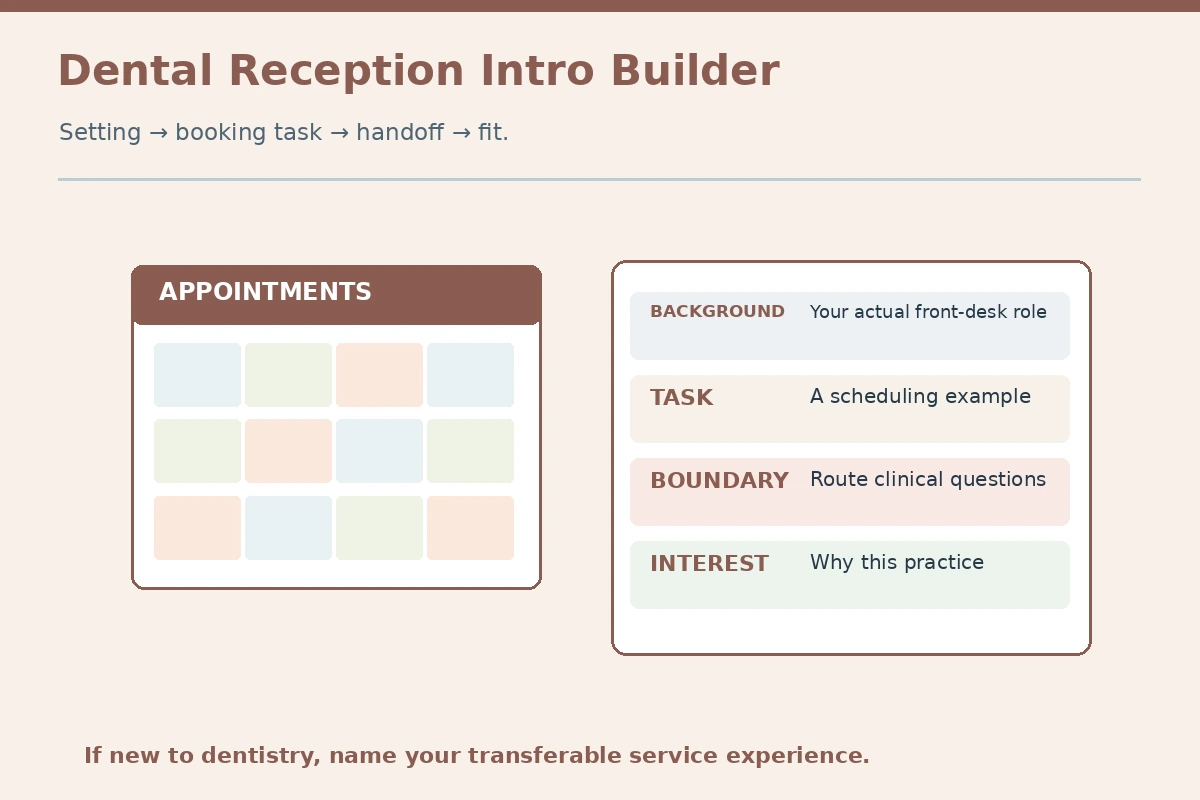
In a dental receptionist interview, begin with the front-desk work you actually know: welcoming visitors, coordinating appointments, directing calls and ensuring accurate handoffs to clinical or billing staff. A hypothetical opening might be “My background is in front-desk scheduling and careful record handling, and I focus on making sure patients get clear next steps without receiving answers outside my role.” Adapt this only to your real experience; it is not evidence that you worked in a dental office.
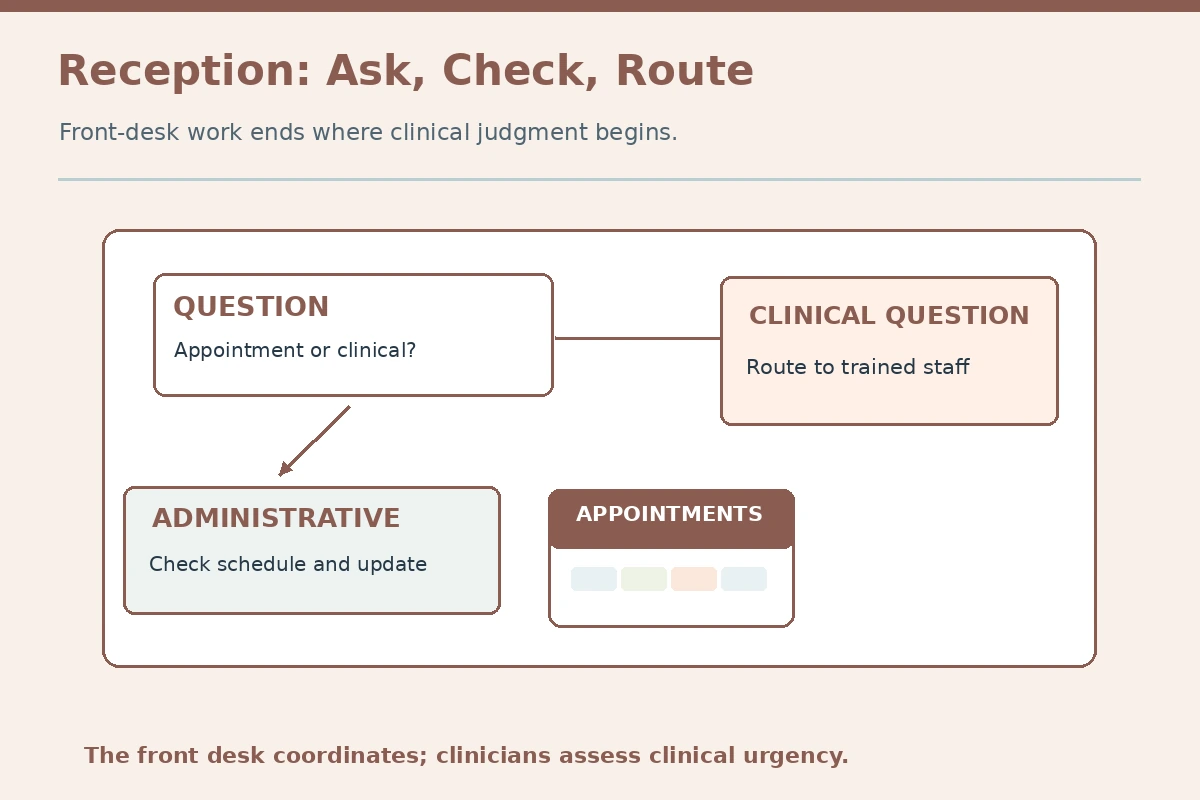
O*NET groups medical reception and secretarial duties around scheduling, communicating with staff and handling administrative records. A particular dental practice may divide these duties between reception, treatment coordination, billing and clinicians. Your answer should distinguish which tasks you performed, what information required privacy and which decisions belonged to credentialed staff. The diagrams below make that division tangible before you rehearse.
Open With Appointment Coordination, Not Clinical Claims
Identify the setting you know: dental front desk, general medical reception, customer service or supervised practice in a scheduling system. If you confirmed appointments and relayed changes, say so. A candidate transferring from a hotel or service counter can mention calendar accuracy and respectful communication without claiming experience reviewing dental treatment plans. The first sentence should establish a truthful connection between prior responsibilities and the target position.
A useful hypothetical line is “I handled incoming scheduling requests, checked available time slots and followed the team’s process for changes.” If you did this only in a training scenario, call it training. Do not say you approved emergency appointments, assigned clinical priority or advised patients about symptoms unless that activity genuinely belonged to your authorized duties. Those decisions depend on the practice’s procedures and qualified professionals.
Show How You Handled a Change Without Losing Context
Choose a situation such as a cancellation, a late arrival or a question about an appointment reminder. Explain the information you checked and the person you updated. You might say, “When a booking needed a change, I confirmed the appointment details and routed exceptions to the scheduler.” This demonstrates task ownership without suggesting that you determined whether a patient could safely delay care. The difference between moving a calendar entry and making a clinical judgment matters.
If a clinician or office manager handled prioritization, state that. Avoid repeating identifiable patient details. A short answer should show that you documented the new status, confirmed next steps through the approved channel and did not offer unauthorized guarantees. The follow-up question may be “What would you do when a patient asks whether a concern can wait?” A careful response explains the referral path to clinical staff rather than inventing medical advice.
| Front-desk task | Accurate introduction claim | Escalate to |
|---|---|---|
| Appointment update | Confirmed time and recorded change | Designated scheduler |
| Clinical question | Directed question to clinical staff | Qualified clinician |
| Insurance query | Checked form and routed inquiry | Billing team |
| Record access | Used authorized request process | Privacy lead or designee |
Connect Privacy to a Concrete Front-Desk Habit
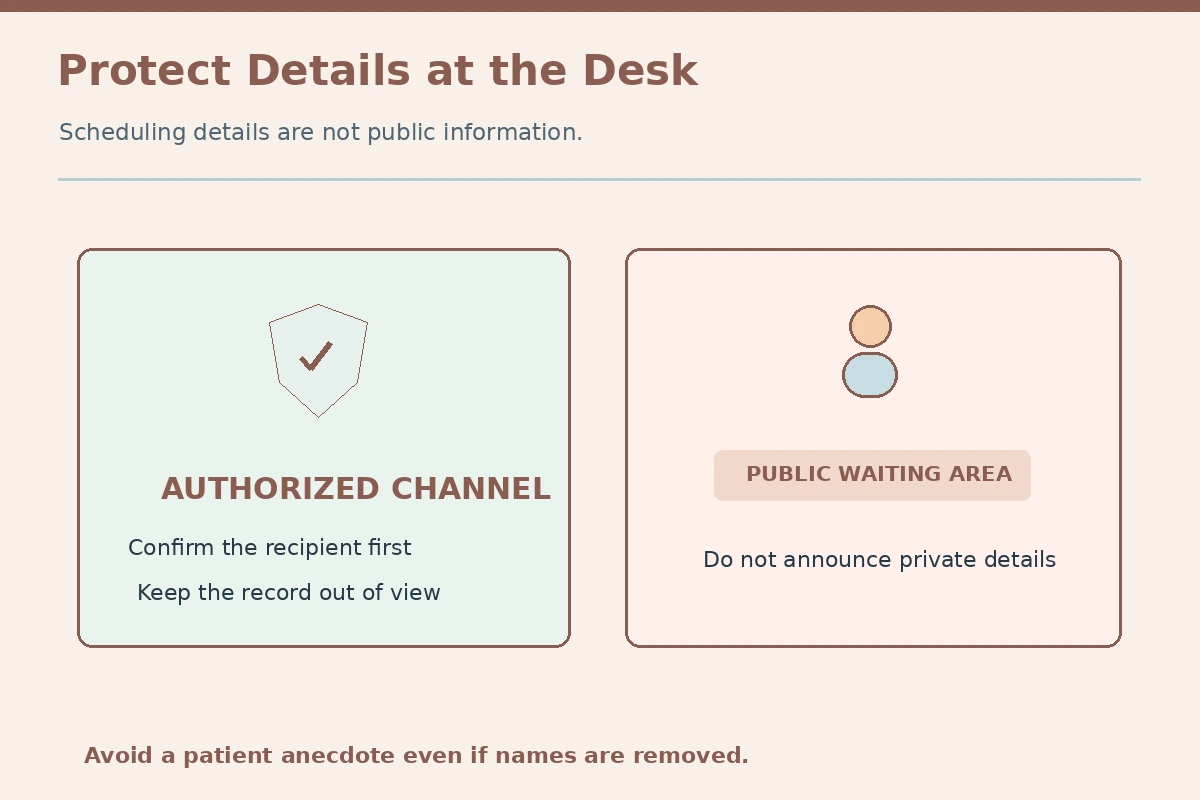
Privacy is more credible when tied to behavior. Examples include checking which person is authorized to receive information, keeping paperwork out of public view, limiting what you say in a waiting area or routing an access request to the appropriate team. Do not state that you personally designed the office privacy program if you only followed it. Mention the particular habit you learned, subject to your real training and employer rules.
Avoid dramatic or identifiable anecdotes about patients. The interviewer does not need a name, treatment, insurance problem or appointment history to assess whether you respect confidentiality. You can say “I checked request details and directed record questions to authorized personnel.” Only claim experience handling protected information if you actually had it. Someone entering from retail can instead explain how they already practice careful customer-information handling and want to learn the practice’s formal rules.
Separate Insurance Paperwork From Coverage Decisions
Dental front-desk roles may involve collecting basic insurance details, preparing forms, obtaining information or communicating with a billing specialist. None of those actions automatically authorizes you to promise that a procedure is covered or approve a claim. O*NET lists various medical secretary activities, but the employer’s allocation of financial tasks is decisive. A precise introduction could mention checking completeness of paperwork and routing questions to billing staff.
If you assisted with estimates, state whether you created an administrative estimate from approved information or merely scheduled a billing consultation. Do not say “I guaranteed coverage” or imply that a front-desk employee made treatment recommendations. Your example should identify the type of record and where it was handed off, not private details about the payer or patient. This boundary can be a distinguishing strength in a busy practice.
Choose an Example That Fits a Dental Office’s Workflow
A small practice might expect phone coverage and appointments while a large group may have separate teams for scheduling, billing and treatment coordination. Check the vacancy for software requirements, hours, referral handoffs or language skills, then choose evidence from what you have actually done. Do not imply fluency in a program simply because it is listed in the vacancy. Describe the system category and one task you could perform accurately.
If your background is customer service, a short example about explaining the next administrative step may be appropriate. If you have worked at a dental desk, a more specific example might concern confirmation lists or responding to schedule changes under manager instructions. Focus on a credible contribution rather than a fabricated patient satisfaction result. Saying that you gave accurate scheduling information is not a promise that treatment outcomes improved.
Practice a Receptionist Answer With a Clear Handoff
Rehearse a compact response: your recent role, one appointment or record example, a privacy or approval boundary and a link to the office’s needs. Try reading it aloud without a patient anecdote. An example structure is “I supported a busy front desk by confirming schedules, recording updates and referring clinical questions to the right staff. I am interested in this position because the work requires courteous communication and accurate coordination.” Only keep the tasks you actually completed.
Prepare to answer “How did you verify a change?”, “What did you do when the schedule was full?” and “Who handled a clinical or billing question?” Those questions test the workflow behind your introduction. If you have not worked in healthcare, say so and give a transfer example from a different setting. The goal is to sound ready to learn a dental practice’s rules, not to sound as though you already have professional clinical authority.
How We Research Professional Interview Introductions
Checked on 2026-11-14: O*NET: Medical Secretaries — O*NET describes front-desk medical secretarial tasks such as greeting people, scheduling appointments, forwarding records and directing calls.; OPM: Structured Interview Questions — OPM explains that job-related structured interview prompts should elicit situation or task, action, and result without unrelated claims.; OPM: Structured Interviews — OPM describes structured interviews as assessments of job-related competencies using past behavior or hypothetical situations.. We reviewed the supplied WordPress post-title exports, local recent draft topics and public search results to separate this professional introduction from other JobAsk articles. Sample answers, diagrams and worksheets are hypothetical: confirm all tasks, qualifications, dates and consequences before using them. Occupational descriptions do not determine any individual employer’s duties or licensing rules; use the actual job posting and authorized guidance. No hiring, interview or ATS outcome is promised. We do not assert partnerships with these sources. Read the JobAsk affiliate disclosure.
More Interview Preparation Guides
Yes, where the employer accepts transferable administrative experience. Describe actual scheduling or service duties and do not claim dental training you lack.
Yes, by describing one truthful information-handling habit and how you follow authorization rules without revealing patient details.
Clinical advice belongs to appropriately qualified staff; describe how you would refer questions under the practice’s workflow.
Explain the calendar, phone and handoff tasks you performed in that setting and show interest in learning dental office procedures.
Only if you handled related administrative tasks. Do not claim authority to guarantee coverage or approve treatment.