
For an environmental technician interview, start with the field or laboratory work you actually performed, one example of accurate sample documentation and how you passed information to the next person. A hypothetical introduction might begin, “My training has focused on following sampling instructions, labeling records clearly and documenting conditions for review.” Call it training if it was training. Never imply that a course exercise proves independent authority to sign regulatory reports or interpret complex laboratory results.
O*NET describes environmental technicians collecting samples and performing tests under the direction of environmental scientists, engineers or other specialists. The role varies by employer, site, sampling program and training. A strong opening therefore distinguishes collecting and recording from analyzing and certifying. The diagrams below make a sample-to-report chain visible so you can show why field notes matter without claiming results outside your scope.
Specify the Field, Lab, or Classroom Context
Name the kind of setting that you actually know: supervised soil sampling, a water-quality course, field note collection, laboratory support or paid environmental monitoring. Do not collapse these into “I conducted environmental investigations” if you only observed an assigned protocol. Your opening should explain whether you collected a sample, recorded the site conditions, prepared equipment or reviewed a worksheet. These actions are meaningful without implying a scientific determination.
A student could say, “In a supervised field course, I practiced sample labeling and kept notes on collection time and conditions.” An employee might say, “I supported scheduled monitoring visits, documented assigned observations and transferred samples according to the project procedure.” These are hypothetical wording patterns. Use only the tasks, tools and sites you can truthfully describe. Avoid naming a sensitive client facility or disclosing location-specific information that the employer treats as restricted.
Explain Sample Identity Before Talking About Results
A field example can begin with a sample identifier, collection location code, time and prescribed handling step. If you were responsible for confirming those fields, that is your contribution. Sample records can help another person understand where material came from and which procedure was followed. However, complete labels do not establish that the material met a regulatory standard. The distinction between a record and an analytical conclusion is central to an accurate technician introduction.
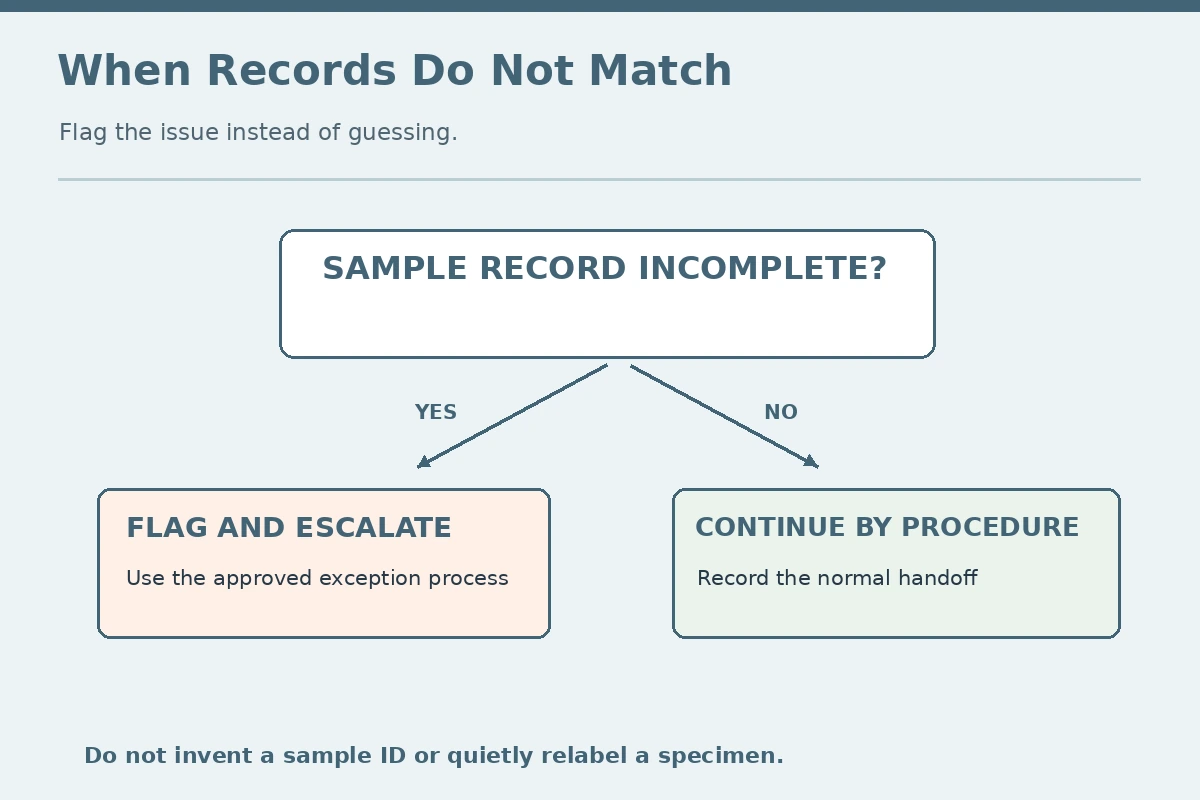
If your work used a chain-of-custody form, name the transfer step you completed and the person or lab that accepted custody, without disclosing confidential sample identifiers. If the process used a different tracking method, describe that instead of claiming a formal chain-of-custody system. O*NET describes collecting environmental materials for testing; it does not imply that every technician signs final findings. An interviewer may ask how you dealt with a missing label or sample-handling exception. Be ready to describe escalation, not improvisation.
| Evidence item | What it demonstrates | What it does not prove |
|---|---|---|
| Sample label | Source and time recorded | Lab result or compliance |
| Field sheet | Conditions documented | Independent scientific finding |
| Transfer form | Custody handoff recorded | Authorization to certify |
| Lab review | Data passed to qualified staff | Personal control of outcome |

Distinguish Observations From Analytical Interpretation
Explain whether you observed conditions, operated a permitted field instrument, prepared samples or interpreted laboratory outputs. These are different duties. Recording an instrument reading is not the same as independently certifying a pollutant level. If a qualified analyst reviewed the data, say that. A useful hypothetical statement is “I recorded measurements in the approved field sheet and flagged any missing or inconsistent entry for the lead technician.” It shows careful work without asserting a final compliance decision.
Avoid unsupported environmental success claims such as “proved the site was safe” or “eliminated contamination.” Those statements may require analyses, sampling designs and regulatory criteria outside a technician’s role. If the result is unknown, describe the documented handoff. If you did interpret results within your actual assigned scope, identify the method and review process without making an invented claim that every test passed. Precision about uncertainty is a technical communication skill.
Include Safety and Authorization Without Overpromising
Field access, personal protective equipment, hazardous materials and collection methods depend on the specific job and site. Do not describe yourself as certified for confined spaces, hazardous-waste handling or specialized equipment unless your credentials are current and relevant. A responsible introduction can say you followed an assigned sampling plan and stopped to confirm unclear instructions, if that is true. The evidence is adherence to training, not a promise that all work was risk-free.
If you supported a team but were not authorized to choose sampling locations or change procedures, explain how you sought direction. For a field-based employer, a short example of documenting weather or site conditions may be relevant; for a laboratory-heavy role, preparing labels and transferring samples may fit better. Never turn a classroom exercise into proof of independent field authority. Each claim should answer who instructed you, what you did, and who reviewed it.
Connect the Evidence to the Employer’s Monitoring Work
Read the vacancy for the target setting: drinking water, industrial wastewater, soil, air sampling, laboratory preparation or environmental compliance support. Choose one example with the closest workflow. Do not list all possible testing methods merely to echo a posting. The employer may use a different procedure or equipment, so distinguish familiar tasks from new methods you would need training to perform. A candidate who can explain careful transfer records may be valuable even without expertise in every instrument.
A useful final sentence could be “I would like to apply that careful sampling and documentation approach in a team where field information is reviewed before conclusions are reported.” The sentence is an expression of fit, not a guarantee of compliance. If you have a specific environmental credential, mention it only if accurate and applicable. O*NET provides general occupational tasks; the actual hiring requirements must be verified in the employer’s current role description.
Rehearse a Short Answer and a Sample-Problem Follow-Up
Organize the introduction into setting, personally completed collection or recording step, review handoff and job fit. Practice it as spoken language and keep enough detail for the interviewer to ask a meaningful question. A hypothetical example is “During supervised water-sampling exercises, I followed the assigned collection instructions, recorded time and site conditions, and reviewed the field sheet with the instructor.” That shows a complete training cycle without suggesting official regulatory reporting.
Prepare for “What if a sample label was incomplete?”, “Who reviewed your field notes?” and “What would you do if conditions differed from the plan?” A good answer does not invent improvisation or independent compliance authority. It explains that you would use the approved procedure and escalate outside your training. Bring your own notes on real coursework, certifications and employment dates; a clear, limited introduction is a better starting point than an exaggerated scientific claim.

How We Research Professional Interview Introductions
Checked on 2026-11-14: O*NET: Environmental Technicians — O*NET describes environmental technicians conducting supervised field or laboratory testing and collecting environmental samples.; OPM: Structured Interview Questions — OPM explains that job-related structured interview prompts should elicit situation or task, action, and result without unrelated claims.; OPM: Structured Interviews — OPM describes structured interviews as assessments of job-related competencies using past behavior or hypothetical situations.. We reviewed the supplied WordPress post-title exports, local recent draft topics and public search results to separate this professional introduction from other JobAsk articles. Sample answers, diagrams and worksheets are hypothetical: confirm all tasks, qualifications, dates and consequences before using them. Occupational descriptions do not determine any individual employer’s duties or licensing rules; use the actual job posting and authorized guidance. No hiring, interview or ATS outcome is promised. We do not assert partnerships with these sources. Read the JobAsk affiliate disclosure.
More Interview Preparation Guides
Use a real supervised course or project, label it as training and explain the sampling or documentation step you personally completed.
Only if your role and verified evidence support such a conclusion. Collecting a sample is not itself a final compliance determination.
Yes if you actually used a documented custody system; describe the part you completed rather than claiming responsibility for the whole chain.
Explain how you checked the record and reported the issue according to the real plan and your training, rather than inventing an independent fix.
Only name real current credentials relevant to the role, and avoid implying permission for tasks or sites beyond your authorization.