
Vendor management skills on a resume can cover very different work. An assistant may request updated delivery dates and maintain records. A coordinator may organize quote comparisons and flag missing documentation. A buyer or manager may have delegated authority to choose a supplier, sign terms or approve expenditures. The resume must make clear which work was yours. Avoid calling routine contact with vendors “strategic procurement leadership” unless you actually performed the decision-making work.
Describe vendor work at your real level of responsibility
The Bureau of Labor Statistics describes purchasing roles involving evaluation of suppliers, price proposals, delivery terms and records. Use those categories to interpret a job ad, not as automatic claims. Identify the type of vendor, the document involved, and what you produced. The strongest evidence often concerns a purchase request, order status or documented exception that another team member could recognize.
Turn quotes and requests into concrete skills
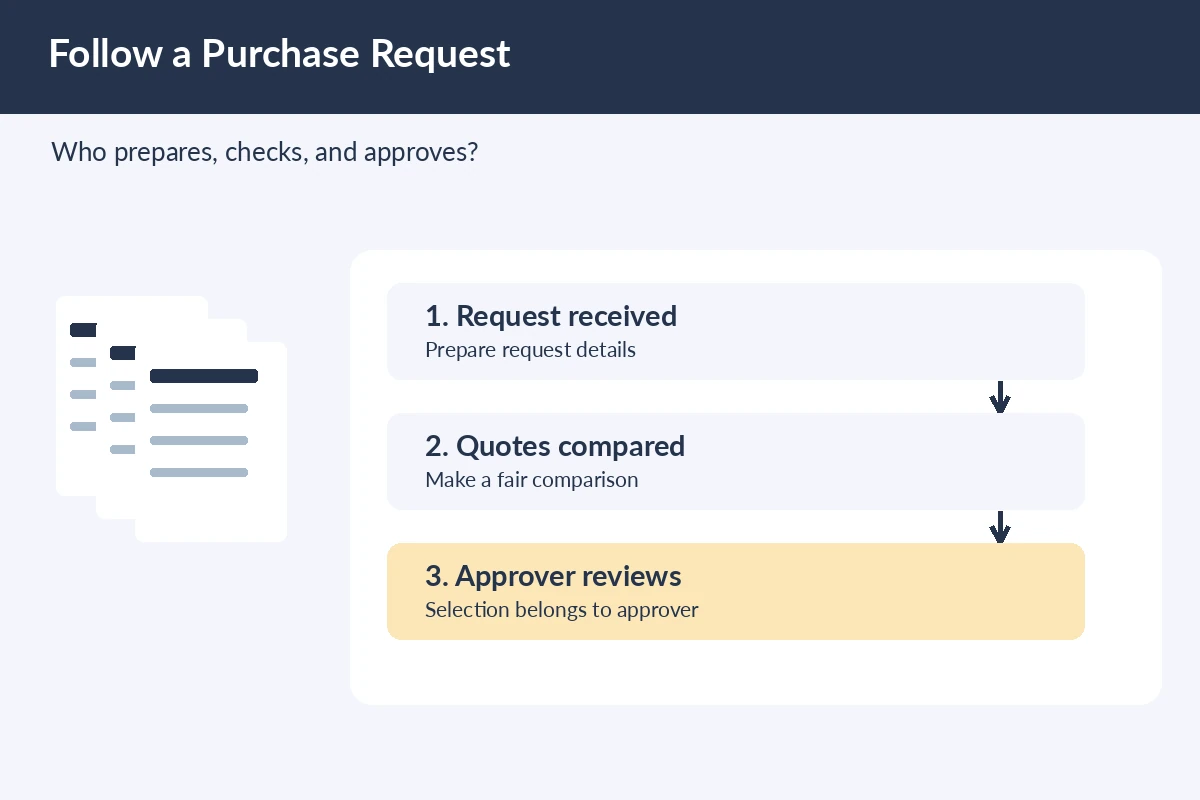
If you helped gather proposals, say whether you requested quotes, checked that suppliers responded to the same scope, entered prices into a comparison sheet, or routed questions to an approved buyer. “Prepared side-by-side comparisons of supplier delivery terms for manager review” shows a real support function. It does not imply you negotiated binding terms. Include the product or service category only if safe and relevant; you need not reveal private pricing or supplier identities.
A useful skills list might include requisition tracking, quote intake, supplier correspondence, order-status updates, purchase-order matching, invoice discrepancy routing, and document control. List purchase-order software only when you used that system yourself. If you learned purchasing concepts in a class, identify it as training rather than presenting practice data as an executed corporate order.
Keep purchasing authority visible
One of the easiest resume errors is substituting “managed purchases” for “tracked purchase requests.” The first may suggest budget responsibility or legal authority that the applicant did not possess. Write an authority map: who requested the item, who compared offers, who selected the supplier, who authorized the purchase and who confirmed receipt. Then write your bullet around the steps you actually completed. No one should infer sign-off merely because your name was on an email thread.
For example, a hypothetical assistant could write “Compiled supplier quotes and routed the comparison to the purchasing lead for selection.” If you actually held a delegated order limit, describe that precisely without disclosing confidential policy amounts. Avoid “saved 20% on spend” unless the comparison and attribution are demonstrable; a lower quoted price alone is not necessarily a realized saving.
Explain order monitoring and supplier follow-up
Many organizations need people to check order confirmations, shipping updates, delivery dates and incomplete requests. Describe how you confirmed information, recorded it and alerted the responsible buyer or operations team when an exception required action. A bullet such as “Tracked approved supply orders, updated expected receipt dates, and escalated missing confirmations to purchasing” is both practical and contained within a support role.
If a vendor missed a promised delivery, your role might have been to obtain a revised estimate and inform the warehouse—not to renegotiate the contract or direct a payment hold. Be specific about the handoff. Names, internal supplier scores and contract terms should remain confidential; you can still explain the workflow and the kinds of records you used.
Demonstrate record accuracy without invented numbers
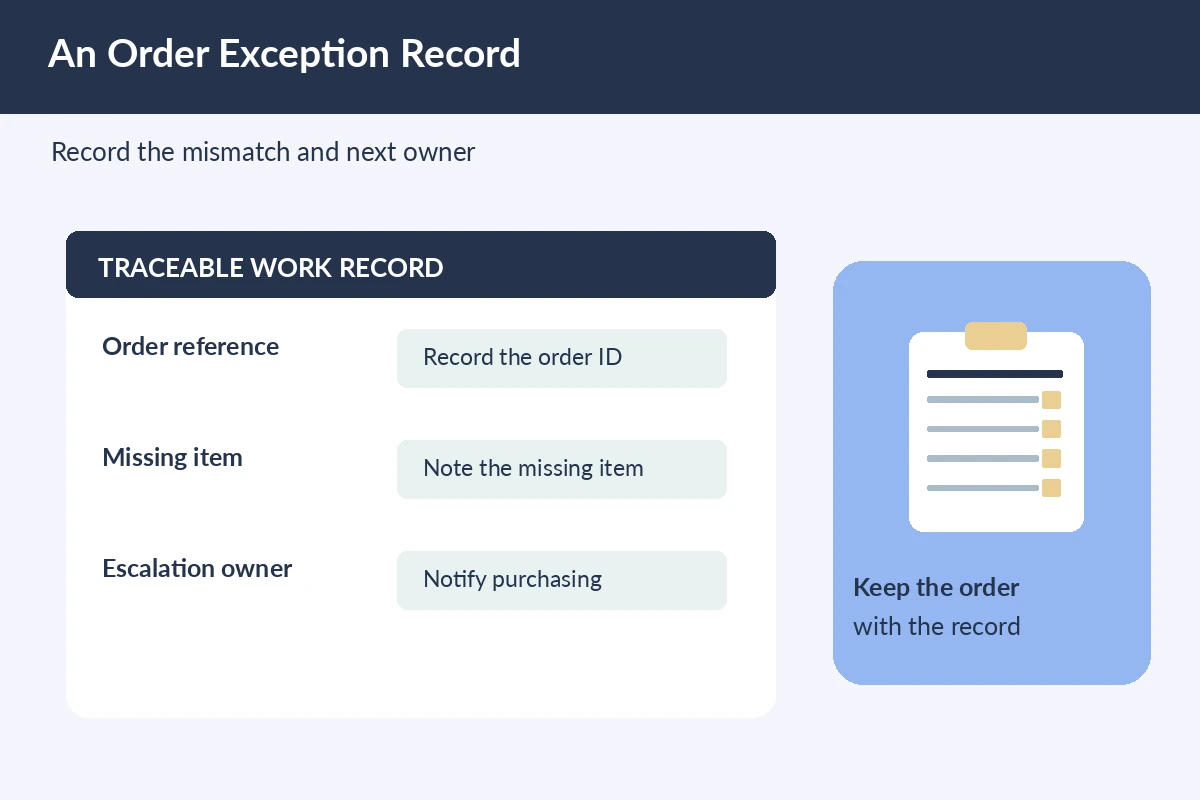
Supplier records commonly include purchase order identifiers, item descriptions, expected quantities and delivery notes. If your responsibilities included matching these fields, explain the exact check and what happened when values differed. “Compared delivery notes with approved purchase orders and logged quantity mismatches for review” tells a reader much more than “great attention to detail.” It also leaves the final resolution with the authorized team.
Never guess a volume of orders processed per week, a cost reduction or a supplier-service rate. If the system provides a reliable count and you can explain your own work, you may include it. Otherwise, use a legitimate process outcome such as creating a traceable exception record or improving the completeness of a handoff—without claiming that an organizationwide KPI changed.

Differentiate vendor coordination from relationship ownership
Sending accurate updates, collecting missing documents and organizing discussions can be valuable supplier-facing skills. However, coordinating messages is not the same as formally evaluating vendor performance, negotiating payment terms or resolving a dispute on behalf of the organization. If you participated in a review meeting, you may write “prepared delivery-status notes for quarterly supplier discussion,” not “directed all vendor performance reviews.”
Look for a posting’s emphasis. A purchasing support role may value accurate requisitions and order follow-ups; a procurement analyst may need deeper comparisons and analysis; a purchasing manager usually requires a different level of judgment. Tailor to responsibilities you can substantiate rather than accumulating grander job titles.
Use one credible before-and-after example
Consider the inflated statement “Led procurement strategy and secured the best vendor pricing.” If your real work was assembling quotes for a buyer, use “Collected comparable supplier quotes, noted delivery restrictions, and submitted a comparison to the authorized buyer.” That version contains a specific artifact and a clear decision boundary. If you truly negotiated or approved purchases, describe the actual role and delegated authorization separately.
A well-edited resume uses verbs deliberately: requested, recorded, compared, followed up, recommended, approved and signed do not mean the same thing. Ask whether you could explain the document, stakeholder and step associated with each verb. If the answer is uncertain, choose a narrower phrase.
Prepare an interview story about an exception
One useful story starts with a missing order confirmation or quantity mismatch. Explain how you checked the requisition or purchase order, verified the available information, contacted an approved vendor channel, updated the log and handed the issue to a buyer or supervisor. The story can demonstrate initiative, accuracy and professional communication without claiming control of a contract.
Before submitting, check that the resume does not expose internal unit prices, customer data or supplier contact information. The employer should understand your method and limits, not gain access to protected commercial records.
How We Research Resume Skills
This guide was prepared for a U.S. audience using occupational task descriptions from the U.S. Bureau of Labor Statistics and O*NET alongside university career-center advice on honest, relevant experience bullets. Sources were checked on November 10, 2026. The scenarios and resume bullets are illustrative, not quotes from a real candidate or claims about a particular employer. Occupational profiles describe possible tasks across an occupation; they do not prove that a given applicant performed those tasks or held decision-making authority. Compare every resume claim with your own records, supervisor guidance, and the target vacancy. We do not promise that any applicant-tracking system or employer will accept a particular format.
Authoritative sources reviewed November 10, 2026: www.bls.gov (BLS covers suppliers, purchase records, price proposals and distinctions between purchasing roles.) www.onetonline.org (O*NET lists purchasing-agent tasks including reviewing requisitions and supplier information.) careers.ucsd.edu (UC San Diego guidance on action, task and result provides a structure for experience bullets.) careers.uiowa.edu (University of Iowa recommends concrete responsibilities, context and outcomes.) These examples are educational and must be replaced with the reader’s own verified duties and results. No supplier, career service, or employer has endorsed these examples. See the JobAsk affiliate disclosure.
More Resume and Cover Letter Guides
It may be more accurate to list vendor coordination, order tracking, or supplier follow-up. Use the term that reflects your responsibilities.
No. Quote collection and comparison are different from negotiation or purchase approval; name your actual part in the process.
Use savings figures only when verified and attributable to your work. A lower quoted price alone does not establish a realized saving.
Name purchasing or procurement software if you have genuine experience with it. Otherwise describe the workflow or training honestly.
Describe a supervised project or volunteer purchasing support task and label its context. Do not pass a classroom simulation off as paid purchasing work.